
A barrage of Candy Bullets
This is one of the stories in our Story-Gems project, a collection of our experiences with our Guru, Sri Chinmoy. Project homepage »
Sometime in the late 1990s I sat in a hotel room in Atitlan, Guatemala, feeling incredibly depressed. Every year around Christmas and the New Year, Guru would travel to different countries for all of us to share and learn from inspiring people all over the world. Several hundred of Sri Chinmoy’s students would stay at the same one or two hotels and we had many functions, plus a lot of time for sports.
Playing soccer earlier that morning, I had felt depressed. Eating breakfast—depressed. A mid-morning nap, avoiding everyone—depressed! In our hotel function room I sat at the back, avoiding Guru’s scrutiny and the banter of friends. Guru had a bag of sweets in his lap and was tossing them out, like a playful father.
Suddenly he stopped, glared at me with a fierce concentration, then began hurling wrapped sweets at me with incredible velocity. I felt a jolt inside and sat bolt upright. The sweets were whizzing by me, a barrage, bouncing off the seating and ricocheting away like hurtling bullets. I couldn’t believe it! Relentless, Guru threw one after another, firing away, a wild fusillade of candies.
Then I caught one and Guru stopped. I held it in my hand and started laughing—Guru started laughing too. Suddenly my depression went away. It was quite extraordinary. He had known how I felt and banished this force from my mind in such a remarkable way. After that I felt happy and grateful to be on the trip and didn’t allow depression back to rule my mind.
When my Lord’s Compassion-Eye
Appears,
My depression-vital
Disappears.Sri Chinmoy 1
- 1. Seventy-Seven Thousand Service-Trees, part 4, Agni Press, 1998
Lunch with Guru
This is one of the stories in our Story-Gems project, a collection of our experiences with our Guru, Sri Chinmoy. Project homepage »
The first time I saw Guru in person was when I became a disciple in San Francisco, but the very first time I got to see him quite closely was in 1975. I was a medical student, learning to become a doctor. I was also doing research, and my advisor paid for me to go to a conference in Iceland which Guru was also attending. This was a conference on what was called “transpersonal psychology” and Guru had been invited to offer the opening meditation for the hundreds of participants.
It was a very small conference, and at lunchtime we all went to eat. Guru was there, and I happened to be sitting right across from him. I was so overwhelmed I felt as though I almost couldn’t breathe. My heart was full of joy and awe. Whenever you were close to Guru, his physical presence was so incredible, along with the spiritual aspect of being with your Master. He had so much life energy you could feel it emanating from him.
There was a cuckoo clock in the lunchroom, which would say “Cuckoo!” for the number of hours on the clock. We were eating at 12:00 noon, so the cuckoo clock went off twelve times while we sat there. I was amazed because instead of saying “Cuckoo!” the clock seemed to be saying “Guru!” twelve times. I was absolutely stunned.
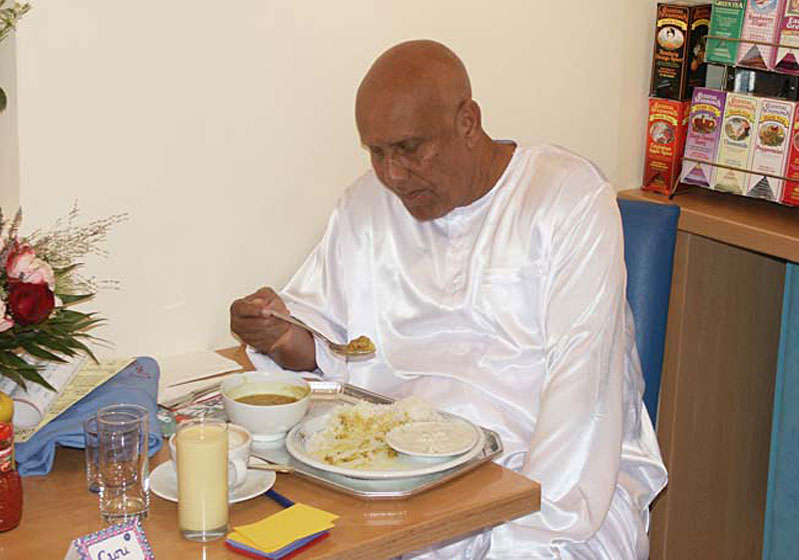
I realized later that the clock was probably saying “Cuckoo,” but Guru’s presence was so strong that I heard the clock say “Guru” instead. No matter what it actually said, being so close to Guru for the very first time that day was a hugely significant experience for me as a young disciple. I treasure those moments to this day.
We came into the world,
Not only to eat material food,
But also to feed our heart
With our aspiration-meal.Sri Chinmoy1
- 1. My Christmas-New Year-Vacation-Aspiration-Prayers, Part 50
Tracking down Paul McCartney
This is one of the stories in our Story-Gems project, a collection of our experiences with our Guru, Sri Chinmoy. Project homepage »
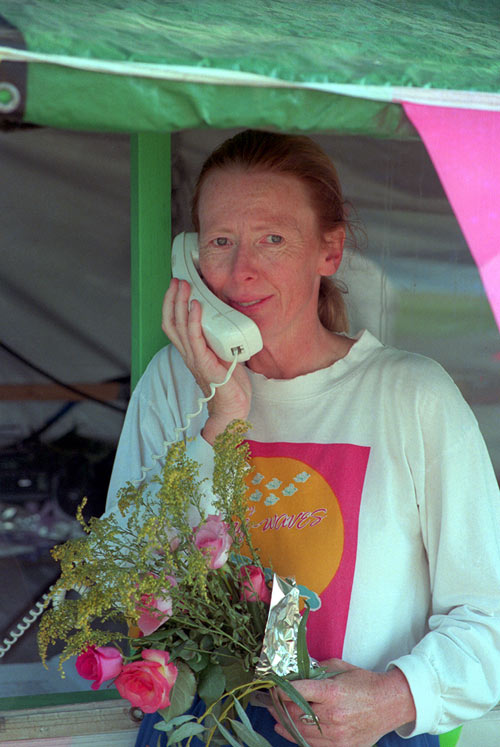 Subarata had a dauntlessness in her, evident not only in her running but in being unfazed by lofty challenges. She had a fondness for some of the Beatles’s songs, and liked Paul and Linda McCartney’s fondness for animals and their strong vegetarian principles. When she learned that the legendary Paul McCartney was in Auckland—the Beatles’s singer and composer himself!—she spent several days single-handedly battling the layers of secrecy, security, and conspiratorial silence surrounding the great man’s visit, a bloodhound relentless in quest of its quarry, finally tracking him down to an exclusive coastal suburb.
At that time Subarata was organising a nationwide torch relay, the Sri Chinmoy Oneness-Home Peace Run, an epic 1,000-km run whose simple purpose was to encourage world peace. Keen to invite Paul and Linda’s support and armed with a Peace Run brochure, a letter of introduction, and a personal appeal for our superstar to meet with us, she marched up to the imposing gates of the McCartney’s lodgings. Their private residence lay behind high walls, most unwelcoming to any impertinent stray caller. At the gates, security staff confronted her and she persuaded one of them to personally give her package to the great Beatle.
Two days went by. Then one afternoon the phone rang and a voice said, “Hello, Paul McCartney here. Can I speak to Subarata Cunningham, please?”
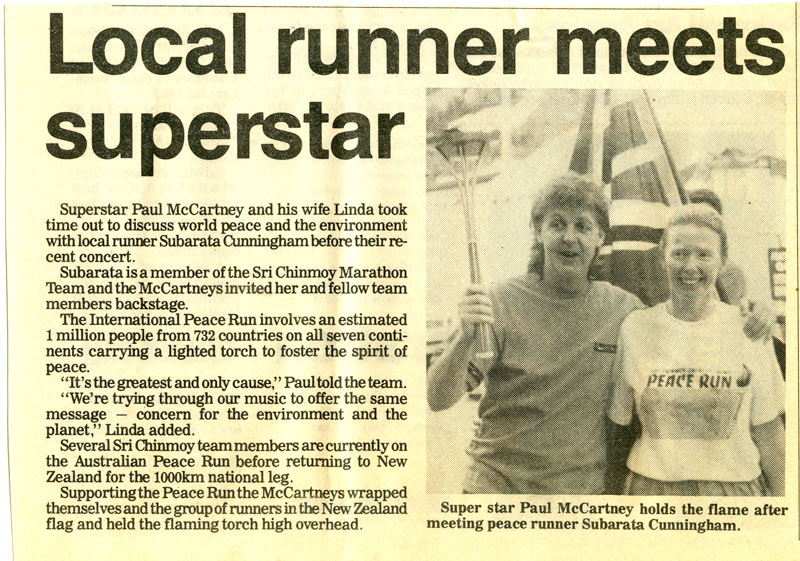 And so it all came together. Sir Paul and wife Linda, hugely friendly and very relaxed, met us at Western Springs Stadium prior to their sound check for a packed Auckland concert. We discussed the Peace Run—lots of photos were taken with the relay’s ceremonial torch—vegetarianism, politics, music, and Sri Chinmoy’s work for world peace. We wandered about backstage for ages with our accommodating new friends.
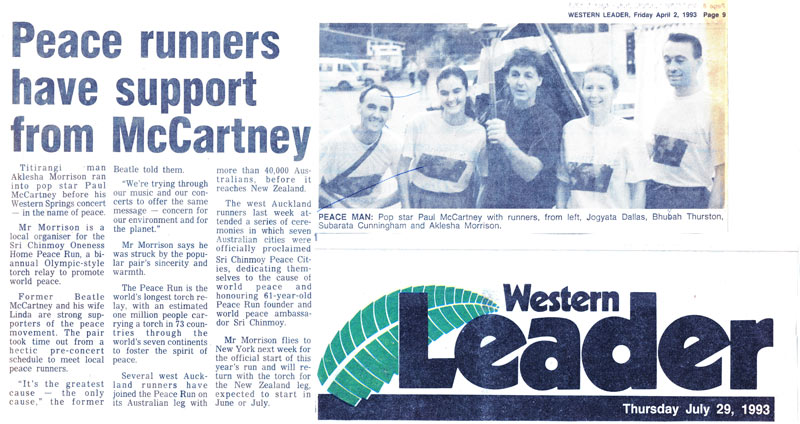
Then handshakes, an exchange of gifts and hopes for the future, hugs, and that was the end of it. Paul and Linda were very charming and affable—with Subarata again manifesting her soul’s quality as the messenger of inspiration and showing us the dauntlessness that came from her faith in her spiritual teacher and her God-love.
The Mysterious Message
This is one of the stories in our Story-Gems project, a collection of our experiences with our Guru, Sri Chinmoy. Project homepage »
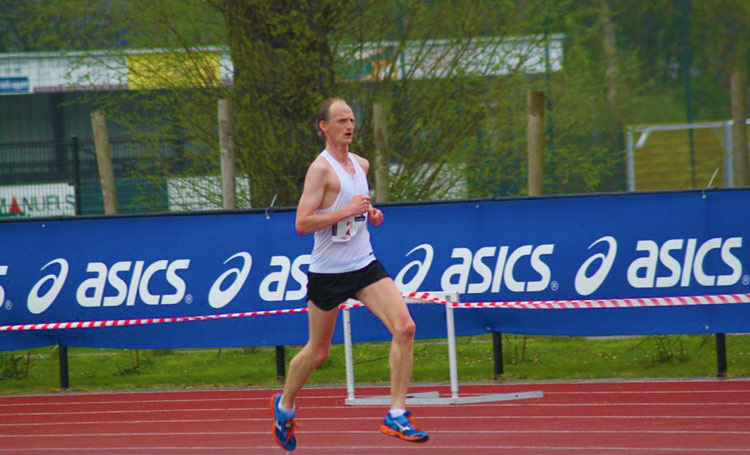
One evening during a meditation program in New York, one of Guru’s assistants came up to me and said, “Guru wants to see you!” My heartbeat went up a few notches as I approached his chair.
When Guru saw me, a subtle smile appeared on his face. Then in his endearing voice with its sweet Indian accent he said to me, “You are a great runner.” Immediately the arrow of his love entered into my heart. He continued, “But you are sad that you are seeing others going ahead of you. Others are defeating you.”
Here he paused for a moment. “But I am very proud of your enthusiasm in singing. You are a great singer.” Another short pause. Guru must have seen the question mark rising in my head, but lack of understanding never deterred him from making his point. As he raised his eyebrows, he concluded, “Don’t worry! Who cares if others are going ahead of you?” Then he nodded his head, letting me know the conversation was over.
I returned to my seat, more than a little confused. It was clear Guru was giving me some sort of message, but I didn’t have the slightest clue as to what it meant. True, I hadn’t come first in the two-mile race that week, but I hadn’t given it a second thought. On the contrary, I’d been quite pleased with my performance. I certainly didn’t feel hurt or humiliated at being defeated. Guru had always taught us to focus on transcending ourselves rather than competing with others. I racked my brain and my heart, trying to digest the deeper meaning behind that casual message, like a cryptographer trying to decipher a secret code. But no matter how I tried, I couldn’t find the key to crack it.
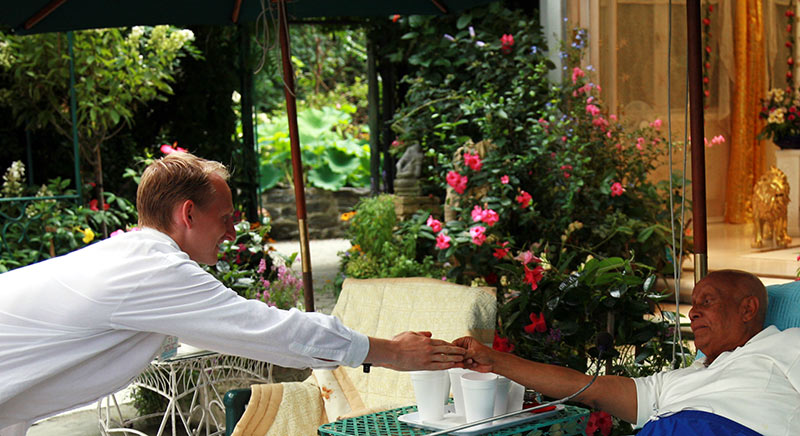
The reason was simple: the message was meant for the future.
For quite a few years I had been among the fastest runners in my running club in Amsterdam. But about two years after Sri Chinmoy’s message, that all changed. Several of my running mates had suddenly made tremendous progress, and I was dropped by the wayside at almost all distances. I didn’t know what had hit me. From one moment to the next, I became one of the slower runners on the team.
This would definitely have fazed me if it had not been for Guru’s message, which immediately came to mind. “Who cares if others are defeating you?” In a flash I realised that Guru had seen this moment would come, years before it actually materialised. Because of Guru’s words I never felt sad, disappointed, jealous, or insecure. Instead, I felt genuinely happy for my running colleagues’ progress, feeling that my time would perhaps still come.
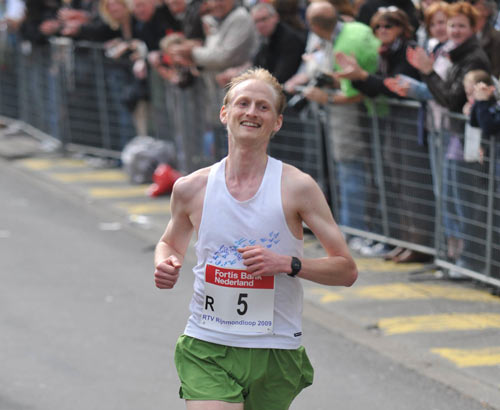
And my time did come, as a few years later I ran my fastest marathon in a time of 2 hours and 27 minutes, finally bridging the gap with my teammates. I’m grateful to Guru for removing that obstacle, long before I was even aware of its existence.
I do not have to be first
In my outer race,
As long as I can do extremely well
In my inner race
Against doubt, worries and anxieties.Sri Chinmoy1
- 1. Twenty-Seven Thousand Aspiration-Plants, Part 256
The 'Claxton Case' and Vijaya's pioneering work at the United Nations
After becoming a disciple of Sri Chinmoy, Vijaya continued trying out for theatre and film parts, but gradually her focus began to shift. At one audition, the director, who was also a friend, pulled her aside and said, “I can see that your heart isn’t in acting anymore, and your real commitment is to spirituality and self-discovery."
In 1974, she was inspired to get a permanent job at the United Nations. With tremendous perseverance, she showed up every day in the Personnel Office for weeks, until she was finally offered a post there. She began working in Personnel, eventually recruiting Tour Guides, and gradually acquiring the legal skills to serve as a legal liaison between UN the Personnel Office and the United States Mission to the UN, in addition to her other tasks.
The Claxton case
In 1988, Vijaya rebuffed the unwanted advances of a high-ranking UN official. At the time she hoped the incident could just be forgotten. Subsequently, however, the same official became her immediate supervisor and continued to harass her, even as he sought to eliminate her job.
In 1991, to save her career, she felt she had no choice but to reveal the truth about what was behind this official’s malevolent actions. What transpired after she filed her appeal before the internal UN judicial bodies sounds like thriller fiction.
To quote from an article about women at the UN that appeared in the New York Village Voice on 20 May 1997: “Someone fired a shot through the glass window of a coffee shop by the United Nations, just above the head of Catherine Claxton. Another bullet shattered Claxton’s windshield as she drove home from her job at the UN one night on the Long Island Expressway. Claxton’s red 1988 Hyundai was almost run off the road in the same spot on the expressway on three other occasions. The incidents ...occurred after Claxton became the first woman to launch a sexual harassment case against the UN."
"The case itself made headlines and history. But what Claxton suffered after she filed her grievance – the gunshots, an office ransacking in which her diaries were stolen and her computer was sabotaged ... and crank calls... has never been disclosed until now... The UN was so concerned for Claxton’s safety that they assigned a personal bodyguard." In addition to the UN bodyguard during work hours, Vijaya’s friends, as much as possible, would take turns accompanying her, also for her safety, whenever she went anywhere after work or on weekends, and this arrangement continued until the case was resolved.
The Voice continued, “The Claxton case was a landmark. The UN didn’t even have a sexual harassment policy until 1992 – after Claxton launched her case." There was heightened media interest when the accused UN official hired a high-profile defense lawyer, as this was a level of representation in internal UN proceedings that was unprecedented.
Also focusing attention on the case was the fact that, as reported by The New York Times on 20 December 1992: “Officials at the United Nations are immune from lawsuits in United States courts, so there is no independent legal route... Many women at the United Nations are vulnerable because they come to the United States on visas that allow them and their families to remain in this country only as long as they are employed [at the UN]."
The Village Voice on 20 May 1997 summarised: “The UN appointed an Irish Supreme Court justice to hear Claxton’s case. She found the official guilty of sexual assault and harassment in 1994. He resigned days later. The UN then tried to rehire him – twice – but backed down after pressure from women’s rights activists...After the official was found guilty...the UN granted Claxton $210,000 in damages and legal fees."
A full-page picture of Vijaya appeared on the front of the28 December 1994 edition of New York Newsday, with the headline “She Won", after the UN finally awarded her the fees. Other papers covered the story as well, including the Los Angeles Times, which ended its article outlining the following positive developments: “The Claxton case, because of the wide publicity it engendered, pointed up the lack of procedures and rules in dealing with sexual harassment in the vast U.N. structure with employees from all cultures in the world. In Friday’s announcement, the Secretary-General said he has assembled a task force to recommend improvements to current policies and procedures for handling future allegations of sexual harassment."
Although the case was a cause of deep personal distress, Vijaya never lost faith in the ideals of the UN, and she would always defend it against any and all criticism, saying that no institution is perfect, nor are the human beings who work there. Dealing with her own case was one of the important factors that led to Vijaya’s long crusade for legal reform in the United Nations.
The more I fight
the more I loveBlade blazing
Smile steadfastSurprisingly I find
I shelter othersHow kind the Supreme to harness
Even my rageAnd transform it
Into His Own Unswerving Sword.Vijaya
published 1999
A pioneer for legal reform
How an actress working at the UN ended up playing a major role in reforming the UN internal justice system, is a story that began while she was still working in her first UN job. Vijaya became interested in defending staff rights and, in addition to her regular duties, began volunteering with the Panel of Counsel. Very soon it became clear that she had a genuine talent for solving cases, with a good grasp of the legal and political nuances, and she was sought after to become a member of the Panel’s Steering Committee to help set its policy and solve its difficult cases.
In 1989, when the post of Coordinator of the Panel of Counsel became vacant, Vijaya applied for the job, which had previously been held by a high ranking official. Ordinarily, a junior staff member would not be eligible for a senior post, but the level of the Coordinator’s post had never been classified. This technicality opened the door for her, as the best candidate, to be selected.
However, Vijaya’s supervisor would not release her from her previous post so that she could begin her new job. When Sri Chinmoy heard of her dilemma, he was very sympathetic and asked if there was not anything she could do to expedite the process. In her typically unstoppable fashion, Vijaya literally pushed her desk and all her filing cabinets out the door and down the hall to her new office to take up her duties as public defender and advocate of UN staff members. The tactic worked, with no one insisting that she return to her old office, and hence she started her new position.
In this position, Vijaya observed first-hand the frustrating inadequacies in the system and its detrimental effect on both the Organisation and its staff. As the number of cases she became involved with reached into the thousands, the need for reform became more and more obvious to her, and more urgent. Because of this and her experiences with her own legal case, she began telling anyone who would listen of the need for internal UN justice reform. She was one of the first to lobby for reform and the most enthusiastic in spearheading the effort to overhaul the system. Sri Chinmoy continuously encouraged Vijaya in these efforts, and she often spoke of the invaluable strength to persevere that she derived from this.
Under the earlier system, appeals by UN staff members usually led to non-binding recommendations by panels of non-judges. The envisioned new system would have panels of judges handing down binding decisions, as well as a mediation division, and an adequately funded office providing legal assistance to staff members, to replace the mainly volunteer Panel of Counsel. After many years a decision was finally made to implement the reforms.
Vijaya
The way Vijaya saw it, “Vijaya Claxton" was known for her successful English Channel swim, whereas “Catherine Claxton" conjured up memories of “The Claxton Case." For that reason, in 2008 Vijaya legally changed her name from Catherine Grace Claxton to Vijaya Claxton, although most colleagues and friends already called her by her spiritual name.
The UN’s handling of her case had come under much criticism at the time, but many of the issues highlighted in the press coverage had since been examined and reforms had been initiated. Vijaya felt she had learned and grown from the experience, and she wanted to continue moving forward into the future. Most importantly, she felt that “Vijaya" was more appropriate for her second career as a mediator, which she found very compatible with her spiritual outlook. All in all, she felt her spiritual name Vijaya, or “Victory", reflected her true self.
Vijaya’s contract was extended three times beyond her retirement age to enable her to participate on the team working to implement the new justice system. It was only when it took effect on 1 July 2009 that Vijaya retired after over 35 years at the UN and more than two decades serving as Coordinator of the Panel of Counsel – with the satisfaction of a job well done, that few would have had the vision, energy and fortitude to complete.
A kind of love not from this world
This is one of the stories in our Story-Gems project, a collection of our experiences with our Guru, Sri Chinmoy. Project homepage »
On December 21, 1969, Guru came to Puerto Rico for a short three-day visit. The first meeting with Guru was on a Sunday morning at 10:00 a.m. Everybody was waiting for him because he had gone out for a walk.
The older disciples were downstairs inside the Puerto Rico Centre with all of us seekers, talking to us about Guru while we waited for him. I had had many, many dreams of Guru by that time, so I was telling them about some of my dreams.
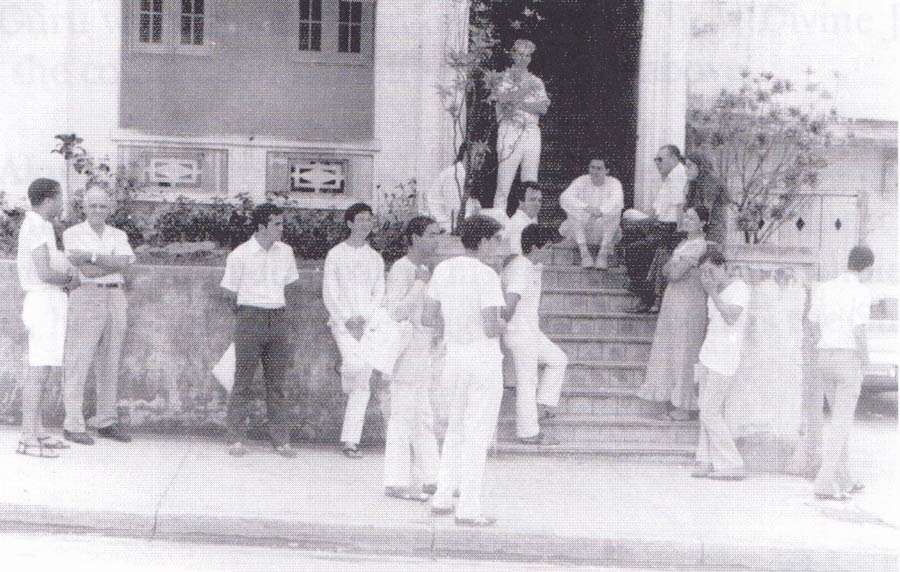
Eventually we went outside. The Centre was located towards the end of a hill. I was facing down the hill as we spoke. Suddenly my hands spontaneously folded and I turned around to look up the hill.
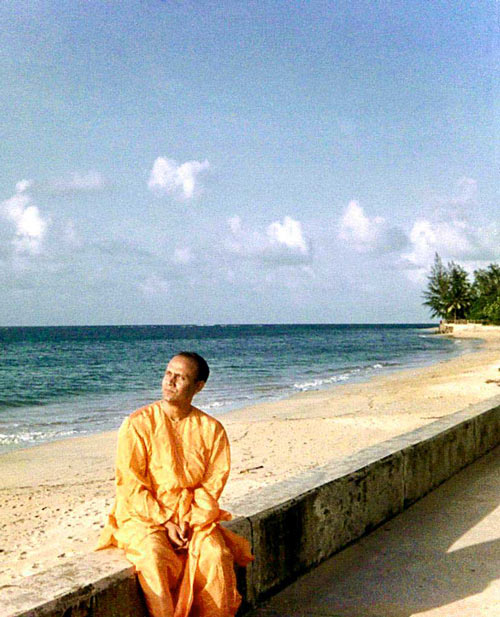
At the top of the hill I vividly saw a young Indian man coming down and playing with a yo-yo. Everyone asked me how I knew it was him.
“I don’t know,” I answered. “Is it him?”
“Yes, it’s him,” they assured me.
It didn’t take long for Guru to come down the hill, and there he was right in front of us. He was looking at us and smiling at each of us individually. I found myself melting, totally melting, at the love that I felt flowing from him. It was the kind of love not from this world, and I knew that it came directly from God. With that love came this incredibly beautiful smile that went right through you and filled everything inside of you.
And that was how I met my Guru for the very first time.
God loves me,
God loves my crying heart,
God loves my smiling soul.Sri Chinmoy 1
- 1. My perfection-promise to God, Agni Press, 1993
Sevananda's stories
- ‹ previous
- 43 of 125
- next ›

Except where explicitly stated otherwise, the contents of this site are licensed under a Creative Commons Attribution-NonCommercial-NoDerivs 3.0 Unported License. read more »
SriChinmoyCentre.org is a Vasudeva Server project.