
Becoming a disciple of Sri Chinmoy
Tilvila Hurwit
Tilvila Hurwit and Lunthita Duthely are good friends, and both students of Sri Chinmoy in Florida. In this video, Tilvila tells Lunthita about her spiritual awakening and how she became drawn to Sri Chinmoy’s path of meditation.
Life in a spiritual workplace
Pranlobha Kalagian
Pranlobha works as a cook in a vegetarian restaurant in Seattle, run by students of Sri Chinmoy. In this short video, Pranlobha talks about the benefits and challenges of working in a spiritual workplace, focused on the teachings of Sri Chinmoy.
From religion to spirituality
Muslim Badami
In this video, Muslim Badami talks about his spiritual journey from following a religious path of prayer to discovering Sri Chinmoy’s path of meditation. Muslim also talks about the importance of his inner connection with his meditation teacher, and how he felt inwardly guided on his spiritual journey.
Four attitudes in chess – all this reminds me...

(top image - Lion by my friend Satyamurthi Miotello)
After I wrote a few things about the game of chess and how something from the game we might be able to use in life, again I realised some other principles which do seem to happen in our lives and are represented in chess (and surely many other activities – maybe all of our activities!) I see the very same structure in Kendo (japanese fencing) while sparring with fellow kendokas.
This time what came to mind are the different attitudes to get to our goals. In chess, the goal is to checkmate the opponent´s king. In Kendo, to score a solid hit, ippon. A few ways to get there are what I thought of now, as a chess and kendo beginner.
The first and most basic attitude is to play tricks on the opponent, hoping he will not see through them and lose. It can work. But even if it works, you know you were not playing solid chess and had to rely on your opponent´s overlooking of the move. And, if it does not work, then you played a huge risk on your part. Now you did your move, which was not enough to win, but your opponent can counterattack on your weakened flank. You are exposed. It is like a game of chance. Neither you nor your opponent will improve by playing such games. At some point, you just give up playing, as there is no permanent solution. This reminds me of the human body of an aspirant.
The second way is by agression. You attack constantly your opponent, hoping to breach through his defenses, even at the cost of sacrificing a part of your army. It might work, and you end up overwhelming your playmate. Or, if he is good in defense, you might sacrifice all your army like waves hitting the side of a fortress and finally, when the tide ebbs, you cannot do anything else and simply remain defeated. There is so much tension in these strategies, but at least one can learn a little from the played game. Much is based on reflex and not introspection. If there where more in depth thought, players would be able to enjoy more and learn more, but this is already an improvement over playing tricks. All this reminds me of the emotive vital of an aspirant.
The third way is by caution. You calculate everything from the standpoint of not losing the game. You enter into such a defense that your opponent will not be able to breach. However, you are then playing alone. You and your playmate will not be able to learn so much from the game, since a living connection between moves is needed to play a beautiful game. Like an instrument trying to solve problems greater than itself. On it´s own sole capacities, it will fail. This reminds me of the intellectual mind of an aspirant.
The fourth way is by constant positioning and building up over chess fundamentals, the root of the game. You and your opponent play sensible moves, neither wholly reacting in defense against new threats nor simply creating a fortress over yourself. Each move is fluid, based on a steady source of game knowledge and maturity, and leading to ever increasing levels of beauty and counterplay. Each movement has two or three applications in itself, based on fundamental principles that will take you to a higher level of structure – not only inside yourself, but also with your playmates. You do not try to win – you do not try to defeat your opponent. You simply try to do your very best, inspired by your playmate’s own efforts at performing his personal best. This is a sound strategy of growth and progress, leading to fulfilment, ease of mind and plenty of energy to do what is needed. This reminds me of the intuitive heart of an aspirant.
That is how I would like to perform all my actions. (Alas!)
When the divine attitude
Purifies the human attitude
Peace dawns in our aspiration-life.Sri Chinmoy, Peace: God's Heart-Home, part 1, Agni Press, 1995
Now, if you are inspired to read on to a higher level, I can recommend Sri Chinmoy’s talk “The five paths of love and devotion”. This particular talk has been priceless in my life.
Joy-Day Games!
Centro de Meditación Sri Chinmoy de Puerto Rico celebra su 50 Aniversario
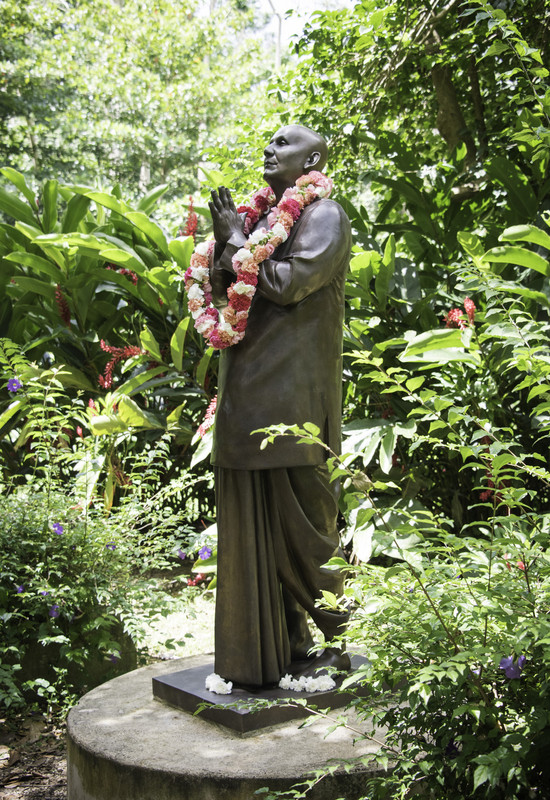
El pasado 22 de julio, el Centro de Meditación Sri Chinmoy de Puerto Rico celebró su 50 Aniversario con la apertura de una exhibición del arte de Sri Chinmoy, llamado "Jharna-Kala" (Fuente de Arte) en la Casa Bailey Ashford en el Condado en San Juan.
Exactamente 50 años antes, el 22 de julio de 1966, fué fundado el Centro de Meditación Sri Chinmoy, cuyo nombre original fué el Aum Centre.
Este centro fué el primero de muchos- luego siguieron centros en Nueva York, en la isla de Jamaica y luego en Europa.
Dichos centros promueven el crecimiento espiritual del ser humano a través de la práctica de la meditación, la música, el deporte, el arte y el servicio desinteresado a la humanidad.
Sri Chinmoy (1931-2007) fué un Maestro Espiritual quien dedicó su vida a servir a la divinidad en la humanidad.
Su instrucción espiritual fué siempre libre de costo, pues el sintió que lo que se recibe de Dios debe ser ofrecido gratuitamente.
A la tierna edad de 11 años, Sri Chinmoy ingresó en una comunidad espiritual (o Ashram), el Ashram de Sri Aurobindo en Pondicherry, India. En dicha comunidad practicaban un tipo de yoga integral, con una base en la meditación y la oración, pero con desarollo intelectual, deportivo y artístico incluído como parte de la práctica espiritual. La música, la poesía, el teatro y la literatura iban de mano en mano con la práctica individual y colectiva de la meditación.
En ese ambiente tan fertil, Sri Chinmoy floreció y se destacó en la rama deportiva y literaria. Fué campeón de los 100 metros por 10 años consecutivos, y campeón del décalo por dos años. Participaba destacadamente en competencias de futbol (soccer) y volleyball.
Al mismo tiempo desarrollaba sus actividades literarias, siendo un ávido poeta y también traduciendo obras del bengalí (su idioma natal) al inglés.
El 13 de abril de 1964 llega Sri Chinmoy a América, inspirado por Dios a comnpartir
con los aspirantes de Occidente los frutos de su vida de oración y meditación.
En el 1966 un grupo de aspirantes puertorriqueños invitaron al Maestro Sri Chinmoy
a venir a Puerto Rico para meditar con ellos. Les gustó tanto la meditación con el Maestro, que decidieron formar el primer Centro de Meditación Sri Chinmoy en el mundo.
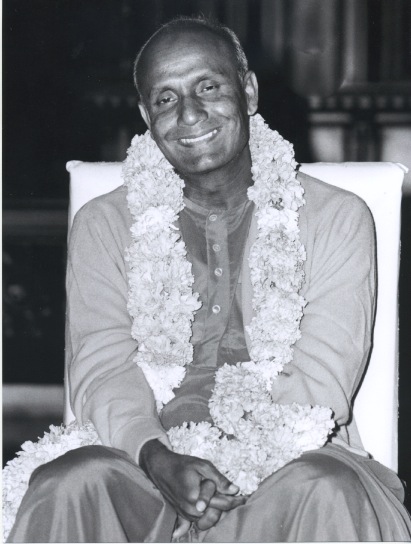
El Maestro Sri Chinmoy en meditación profunda y elevada.
El Maestro Sri Chinmoy habla acerca de la diferencia entre la mente y el corazón.
Hoy en día hay más de 60 Centos de Meditación Sri Chinmoy en el mundo, ofreciendo
clases gratuitas de meditación, conciertos gratuitos de música meditativa, eventos de fondismo y la Carrera por la Paz.
Discípulos en concierto "Songs of the Soul"
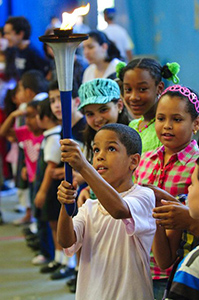
Niños en Puerto Rico sostienen
la Antorcha de la Paz
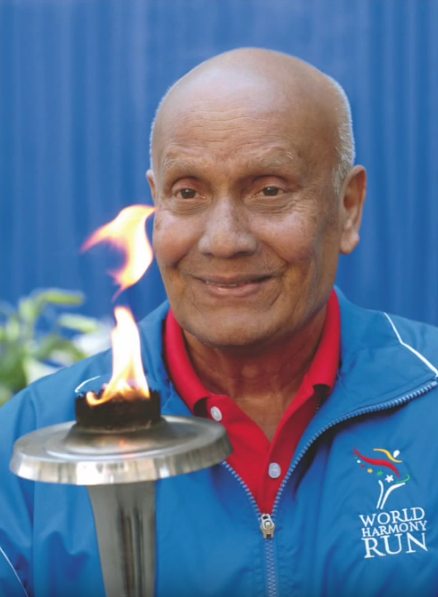
Sri Chinmoy medita al inaugurar la Carrera por la Paz
Video acerca de la Carrera por la Paz
El Presidente de Portugal inaugura la sección europea de la Carrera por la Paz 2020
Carrera por la Paz Sri Chinmoy- Hogar de Unidad- Culmina en Agosto 23 en Nueva York
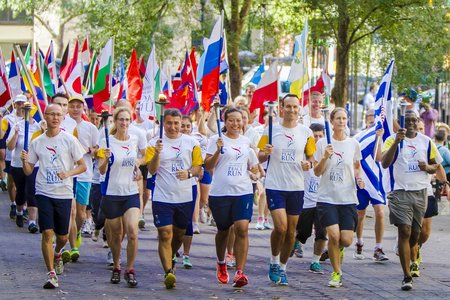
El pasado 23 de agosto concluyó la Carrera Por La Paz Sri Chinmoy-Hogar de Unidad- de 2016 en el Dag Hammarskold Plaza en Nueva York.
- ‹ previous
- 73 of 125
- next ›

Except where explicitly stated otherwise, the contents of this site are licensed under a Creative Commons Attribution-NonCommercial-NoDerivs 3.0 Unported License. read more »
SriChinmoyCentre.org is a Vasudeva Server project.