
Lamb Lifting
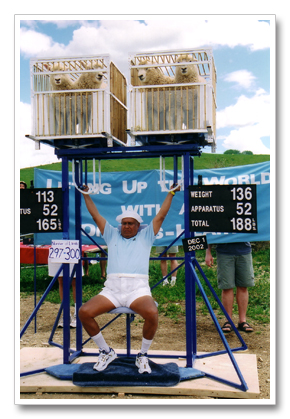 New Zealand in December, 2002. Sri Chinmoy stands in a field surrounded by last spring’s lambs, all around him green landscapes of hill country, clumps of forest, above him a deep blue sky with high-up skeins of wind-brushed cirrus. In this arcadian setting an extraordinary event is unfolding, one that will capture the imagination of the whole country for weeks to come.
Sri Chinmoy has set himself the goal of lifting 1,000 lambs during his stay in Hamilton and Taupo and on a number of central North Island farms musterers will bring in the ewes and lambs and draft the lambs into holding pens in readiness.
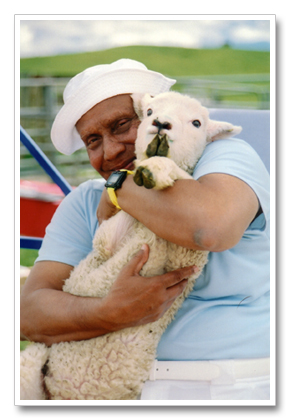
In spiritual literature the lamb is often seen to embody the qualities of innocence, helplessness and purity, qualities Sri Chinmoy saw as foundational in our reliance and dependence on God. Iconic symbols of New Zealand’s pastoral heritage, lambs presented Sri Chinmoy with a completely novel opportunity in a weightlifting career filled with wonderful innovations.
Two or three lambs were placed in each of two large bamboo and aluminium cages – and each cage was placed above Sri Chinmoy on his Lifting Up The World With A Oneness-Heart apparatus, one cage positioned independently above each arm. Sri Chinmoy would meditate briefly, summoning his inner reserves, then simultaneously lift each cage of lambs together, holding them briefly aloft before lowering them gently back onto the platform.
 With each filled cage weighing up to as much as 265 pounds, the combined lifts often exceeded 500 pounds – these heavy lifts were repeated until 100, 200 or more lambs had been lifted in each session, a feat of both remarkable strength and sustained endurance.
Media interest was considerable and this colourful and imaginative tribute to New Zealand and to the symbolism of the lamb received a great deal of television and newspaper coverage. Sri Chinmoy the composer also rose to the occasion – several lamb songs were composed and sung by the group accompanying him, a vocal performance marrying the extraordinary with the charming. Under a wide summer sky an unforgettable blend of athleticism, joyful tribute songs, a delighted crowd of onlookers and a memorable message of inspiration.
Sri Chinmoy commented: “Why am I doing this? I have a deep love for lambs. The saviour Christ had a very special affection, love and fondness for lambs and I also have a very special inner feeling for lambs. We all need to be God’s lamb-children.”
"My goal is to inspire people – by lifting up one thousand lambs I feel God has given me a golden opportunity to be of service to Him and to inspire others to fulfil their own goals."
– Jogyata.

In Johannesburg
Autumn has arrived in Johannesburg and behind the electrified, fortress walls of every suburban home the mannered lawns and summer gardens are under siege, buried under drifts of burnished leaves. We have just finished a great week of meditation classes, seven consecutive days, two sessions daily – a lunchtime city library course then an evening class, five consecutive nights at a yoga studio out in the sprawl of suburbs. Africa is such a challenge, an ancient continent awash in both problems and horrors but filled too with such heart and promise.
Growing a centre here is uniquely challenging – and for those living here there is the powerful spell of a city that captures you with the enchantments of wealth, oppresses many more with the harshness of its poverty and suffering. In this environment the mere fact of a centre at all is a triumph – success is measured not by the number of disciples but rather in those thousands of lives that have been touched and in some way inspired through classes, the spiritual life re-introduced into the forgetfulness of those who excessively have or into the hopelessness of the impoverished, of those who have not.
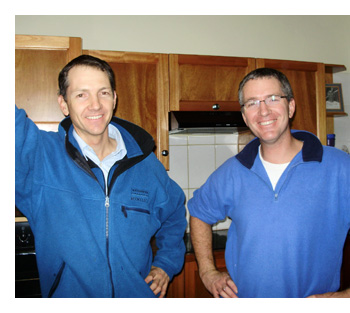
Balarka and Abhijatri – civil engineers by day and divine warriors after sundown – have just renovated a new centre that has a beautiful new second level meditation room and large downstairs class space. Plus a garden large enough to toss around a frisbee. Plans are afoot to launch a large J.’Burg Festival of Meditation later in the year - this might include a concert, a Jharna Kala exhibit, guest speakers, yoga and meditation w/shops.
The task of bringing Sri Chinmoy's philosophy into Africa is at it’s very beginning, but when in those rare and random moments we sometimes feel our own soul’s promise to do something significant, something more, and open our hearts to the possibility that in some small way, in some far away place, we can bring our own love and our belief in Guru’s vision to bear, then what is not possible?
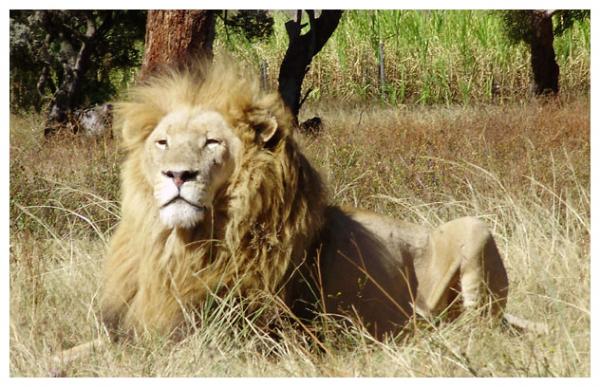
When invited to share the sweeping majesty of the veldt with this regal king of the beasts – a
stunning photo opportunity from our vehicle window – Balarka showed a disappointing
reluctance to leave the car, a rare lapse in his usual fun-loving nature.
Flying home last night, far below the great cities of Africa were sprawled out against the darkness of the continent, shimmering pools of light like smouldering prairies. Wedged into my narrow seat I was visualising the millions of unknown lives far below, thinking of the universality of all human experience, the great stations of life we all must visit as we play out the leading roles in our own personal melodramas – the great stations of desire and loneliness, poverty and plenty, love and lovelessness, the entanglements of attachment and ambition, the sudden or slow betrayals of the flesh, dying and death, and of how extreme these are in Africa. Wondering what it really is in our lives that has some enduring value or meaning, what lifts it up out of the ordinary and finite to bring dignity, clarity and purpose – and seeing that our discipleship, our God-quest and devotion are all we really have and will finally be the only measure of our life’s achievement.
– Jogyata.
The Big OE
In the early 1970s I did what most young New Zealanders do and traveled to England on my first big O.E. ('Overseas Experience'), a landmark rite of passage for us colonials, the fledgling bird departing the national nest, leaving behind a lovely New Zealand summer of blue skies and bright promises and many kinds of certainties. The London sky was the first thing I noticed, a motionless bleak grey pall. It had the feeling of being a permanent fixture as though a random grey day had become frozen in time, winter in stasis, and that it would always be like this – which it was most of the time I was there. I liked it, for in some haphazard association of the mind it imparted a sense of festivity, of an endless Christmas. I was dressed incongruously on arrival in shorts and jandals, unmindful that the southern hemisphere summers of my home will always coincide with the northern winters. My suitcase contained a sleeping bag, some beaten-up volumes of Lawrence Durrell’s Four Quartets, a favored brown suede jacket and a few items of clothing – a minimalist traveler’s fare. Beyond this I remember almost nothing of my two years there – it has all fallen into the sea.
In one place where I stayed though, I do remember befriending a lanky, intellectual Dutch girl with whom I shared long, earnest conversations while rambling across the Wimbledon golf course, oblivious of the flying balls and the shouts of peeved golfers. She gave me a copy of a book on Zen Buddhism and I sat under the relentless grey sky to brood over the reflections of those who had traveled far on the inner journey before me. There in that book were ten representational sketches of the quest for liberation – called the 'oxherding pictures' – in which the seeker is attempting to tame the mind and find his true and original Buddha nature, here depicted as a wayward oxen.
The work of the 12th century Chinese Zen master Kakuan, the simple sketches and accompanying verses reeked of enlightenment and I sat under a tree in Wimbledon’s green acres, entranced and enchanted. The simple drawings began with the Zen initiate seeking the realization of oneness, the effacement of every conception of self and other.
'Desolate through forests and fearful in jungles,
he is seeking an Ox which he does not find.
Up and down dark, nameless, wide-flowing rivers,
in deep mountain thickets he treads many bypaths.'
'Innumerable footprints has he seen
in the forest and along the water's edge.
Over yonder does he see the trampled grass?'
In the progressive sequence of sketches the mind is gradually tamed and the seeker of truth begins to observe the waxing and waning of life while abiding in a state of unshakable serenity. There is nothing to strive for, neither gain nor loss. The waters are blue, the mountains are green. Alone with himself, he observes things endlessly changing.
'Whip, rope, Ox and man alike belong to Emptiness.
So vast and infinite the azure sky
that no concept of any sort can reach it.
Over a blazing fire a snowflake cannot survive.'
In the later sketches the oxen disappears – the unruly mind and the meditator have both disappeared into a great void of pure being, no 'I' or self left.
'Seated in his hut, he hankers not for things outside.
Streams meander on of themselves,
red flowers naturally bloom red.'
'Barechested, barefooted, he comes into the market place.
Muddied and dust-covered, how broadly he grins!
Without recourse to mystic powers,
withered trees he swiftly brings to bloom!'
When I examined the simple drawings I felt a slow soul thrill that tingled inside me for days, as though here at last was the sum of all real knowledge, something so quintessential that all further outer traveling would cease to have any point or meaning. The whole book smelt unmistakably of enlightenment – and I knew too that this moment of discovery was a remembering, a hyphen between this lifetime and all that I had discovered before. I still see the ox herding sketches in my mind and sometimes, on a quiet sea shore or by a mountain stream, revisit them to cast about for the footprints of the ox, the Buddha self, and sit awhile in a serene and grateful and smiling contemplation.
– Jogyata.
Farina And The Free Bananas
 Life is full of charming and also poignant moments. Yesterday for example I was buying a few vegetables at my local Asian supermarket, a ramshackle and unkempt affair bustling with Thai, Korean, Chinese and Polynesian people jostling over bargains and loose pallets of apples, mandarins, grapes, fresh coconuts from the islands. I managed to add a last enormous bunch of perfect and cheap bananas to my basket then queued up at the checkout. Behind me an Indian lady was wrestling with armfuls of groceries and dropping first a bag of apples then her money then a whole bag of Chinese gooseberries to the floor. They burst from their bag and spilt across the aisle like golden marbles and several of us began to help the poor lady recover them. To reassure the lady that all was well I said to her, "Where are you from?" She said, "My name is Farina and I have just come from India." Then she asked me if there were any more bananas in this place, they were her favorite fruit, but I said there were not.
Outside in the street I saw Farina waiting for a bus and she called out to thank me for helping her. Referring to the spilt fruit she said, "I have had a bad day. I arrived here to find my husband has left me and I know nobody. I am frightened for the future and I keep dropping everything." Then she began to cry. I felt sad and we sat there for a while. I said to her, "Farina it is not really a bad day. I want you to have my bananas too, just to prove it." I was remembering what Guru said, that anything worth having is worth sharing as well. Farina started to laugh, and I put the bananas in her bag. I told her, "Endings are also beginnings – today is a great day that you will remember."
Then another lady who had been at the checkout came and began talking to Farina. I said goodbye and told her, if you get into trouble you can call me. The bus stop was adjacent to the front entrance of the Centre and I lifted up the grill and went inside. Next morning when I went out, there inside the grill was a large bunch of bananas and a note from Farina that simply said, "Since yesterday, so much kindness everywhere – thank you for helping in my new beginning."
The more we pause to reflect and look behind the veil of appearance and seeming in life, the more we see the Supreme's little game unfolding and how touching everything really is.
– Jogyata.
Last Flight Home
I was on a flight down to Christchurch and talking with my adjoining passenger, an orchardist from Motueka, about the easy things that strangers find in common. Then he was telling me about the recent death of a cherished family member, a loss that he was struggling with, and I felt very sorry and touched by his candour. When he slept for a while I wrote a little poem, giving it to him only at the luggage carousel as I departed. Perhaps he liked it – but I will never know.
Last Flight Home
My heart skipped
When you came
Boy child, fat brat, little Buddha
Teaching me again how to laugh.
Who can scream loudest,
Spit furthest, monkey up
Through the gnarled kingdom
Of the macrocarpa fastest,
Shinny up the ancient boughs
To your aerial kingdom of twigs
Child monarch of rooftops,
Emperor of all we could see.
Burdens banished
When you gathered in my lap,
Settled to sleep
Against my warm hollows.
Rotten apple hand grenades
You lobbed in the orchard.
My white limbs reeked like a brewery.
Tonight we’ll supper
With the blooded tribe
The floral skirted elders
Then tomorrow’s last flight home.
Look at this snap
Our faces pressed together
In that fading time, my arm
Outstretched for our posing.
You look pensive, little nephew.
Did you know then
That nothing is certain?
These few keepsakes
Will take their place
In my ragtag album
I so soon a long ago uncle
With nothing much to offer now
But love.
– Jogyata.
Being Single
Writing always begins with the blank page, blankness in the mind. We sit awhile in contemplation, an attentive waiting, looking for the genesis of words, the scattered seeds of language, a spark to kindle inspiration or a touch of grace, the gift of insight. And today, waiting for something to come, when at last it does I am being lured away from the proposed Inspiration-Letters theme of 'time', veering off course and thinking instead about the value of celibacy. Well, let me follow these thoughts and see where they will take me...
In a society where the idolatry of romantic relationships has become obsessive and unchallenged, the choice of celibacy is widely perceived as a strange and bemusing one. Usually associated with cloistered religious communities – Benedictine monks, convents of pale, otherworldly women renunciates, Indian ascetics, archaic Christian orders – celibacy is a mystery to a culture that has never really questioned it's own idealisation of physical love, soul mates, partnering, marriage and remarriage. Celibacy brings these notions skidding to a halt, challenges our Western promiscuity, irritates even feminists who see it either as male misogyny or a denial by women of the capacity to love. It undermines our traditional notions of happiness and puzzles mainstream society through it's extreme disregard for what is considered normal.
True celibacy though is not a negative state of repression, deprivation or incompleteness, nor is it a contraction of love. It is instead a state of great potential where the soul can make room for God. It allows the development of a deep sense of self grounded in a relationship with one’s chosen divinity, Christ, the Buddha, Sri Krishna, one's guru or some personal sense of Deity. It is a singleness of heart, an ability to stay centered, an inner marriage to one's ideal. Celibacy in discipleship is the outer expression of a commitment to God, a singleness of purpose.
For most of us, celibacy may bring an intensification of the human loneliness that we all know. But we also know that loneliness is never finally assuaged by others, for human relationships are a shadow of the soul’s deeper quest for yoga, union with God, and only this final union can satisfy us. "It is the union with God that is the original," writes M. Marnau in Revelations of Divine Love, "and the human union that is the imitation..."
In our choice of aloneness we create space for our guru or God. And as this inner union comes to life, becomes more real to us, we expand our capacity to love. We come to understand too our karmic responsibility to not disturb the spiritual quest of others; we slowly come to a love that is desireless and free of need or expectation; we sublimate our desires in the recognition that what is most beautiful in others is only the God that we seek within ourselves.
Marriage and partnerships are another valid way to also achieve these goals, merely different paths to the same destination. My own guru, Sri Chinmoy, helped me to understand the spiritual dimension in my own marriage, its twenty years and endlessly recurring chances to widen and deepen love, practise a fledgling selflessness in the front lines of often fiery dispute, work at reconciliation and a deep caring. To wear down the ego in otherness, weep at another's tears, despise and pray to be rid of one's own unkindness.
Celibacy too has much to offer us. I value my growing capacity for genderless friendships that recognise and honour the sacredness of the spiritual lives of others, requiring a renunciation of self-interest, reminding me as Sri Chinmoy reminded us all to always see God in everyone around us. Not a repression of love but an expansion of love and it's redirection to a higher level of existence. Celibacy deepens our talent for relationships, that we can love without desire, listen with genuine caring, serve without need of gain, shift love upward from eros to caritas and agape, the divine love of the great masters and servers. Sri Chinmoy calls this ‘purity’.
Celibacy is a rejection of the pervasive, consumerist model of relationships. It allows an accommodation of all others in our heart, allows us to relate to people as human beings and to give up the pursuit of others as possessions. In celibate love we are more available to others, learning to listen more deeply and without possessiveness or need. Those who embody a celibate’s consciousness, one that is inwardly assured and grounded, are often gracious and pleasing and empathetic, making us feel appreciated and valued for what we are. They recognise and respect the boundaries of propinquity, safeguard themselves and protect others from themselves, placing relationships into a spiritual context that dignifies and brings out the best in us.
Celibate love lights up the heart. It sublimates vital energies into sympathy, tenderness or deep concern, and after such encounters we always feel better about ourselves and the world, uplifted and somehow touched by a mysterious and novel kind of love. It's goal is not some otherworldly holiness but that hard won, great detachment that a renunciate's path finally brings – and God love, freedom from desire, an equanimity enduring through all the struggles of life, the unfettered love that at last sees only God in everything.
Human interaction is the schoolroom, the great practicing ground of celibacy; we fall in love easily, and perhaps the experience of love is the only real teacher of love. Or in the words of one Benedictine monk – "To fall in love is celibacy at work". A disciple's celibacy might at first seem a constraint, but then becomes part of a long process of personal conversion, providing the conditions and challenges in which one’s inner development can best flourish. In a lifetime of sometimes loneliness, the struggle to transform our inner longings can be painful and wrenching, but we cry harder than ever to God, pray with real tears for release and consolation. I often feel that God shields me from all the things I am most vulnerable to – since I lack the strength to cope, He simply takes them out of my way.
Celibacy means taking all our feelings and emotions and putting them where God wants them to go. It stretches and transforms our notions and abilities in love, teaches us to love non-exclusively – it's fruit is a widening hospitality of the heart. Celibacy, writes the Benedictine monk, means "not focusing on 'what I gave up' but on what being freed by what I gave up has allowed me to do in terms of my service to others..." And the goal of all love, which celibacy helps us to realise, is union with and service to God.
Marriage or relationships and celibacy are not polar opposites – there are many married celibates who have achieved restraint, purity and the sublimation of physical desires, and unmarried celibates tormented by the clamourings and impulses of mind and body, the 'wild orchestra of the hormones'. For the latter, a commitment to celibacy is the beginning of a process of rapid change, of self scrutiny, the advent of grace which effort brings, intense plea and prayer, disentanglement, the karma yogi's path of daily mindfulness, bringing pain into context and consciousness – 'celibacy at work'.
Seeing too the ability to love and to need love as also a gift from God, but slowly learning to transform this love into a celibate context, converting all relationships into one’s primary relationship with God. Understanding that falling in love is also a part of seeking God – thus having patience and renunciation, fidelity to the path, the guru.
All this effort for spiritual progress is of course hard work, the alchemy where base ignorance begets a shining liberation, but then our struggle is a microcosm of the cosmic game itself and we cannot make progress in a vacuum. Sri Chinmoy's writings speak to our daily trials with reassurance and humane advice, and remind that our efforts will in the future 'be most surprisingly rewarded'.
Fifteen hundred years ago St. Bernard asked of God wonderingly... "What are we, that You make Yourself known to us?” Today's masters tell us that we are all forgetful Gods ourselves, remembering and finding our way back home again, each of us treading our own path, playing our own leading role, all the way back through the needles eye.
– Jogyata.
Adelaide
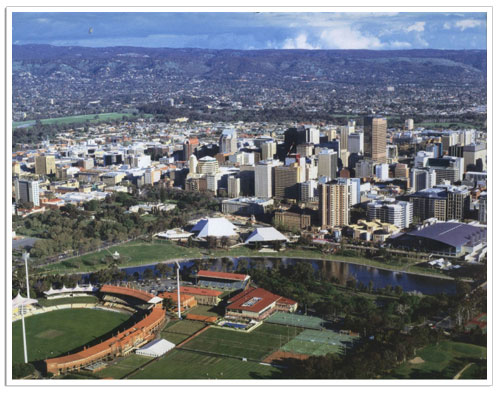 Adelaide after 30 years away. I do like this city – manageable, navigable, humane, good-natured. Feeling some sense of special occasion, the heart's hidden calendar of beginnings and endings, anniversaries, dates treasured by the soul – it was here, three decades ago, that everything started for us, two gypsies with their collie dogs.
Friday's arrival and Sipra whisks us from what has to be the best, most spacious airport on the planet to the spacious and popular Joy-Discovery vegetarian café in the city for some nourishment – then on to the Centre and a quiet evening.
Waking up early Saturday – outside the dawn gaiety of kookaburras, their parody chortlings and chucklings, caroling magpies and the frenetic cries of parakeets hurtling through the boughs of eucalypts in aerial pursuit, their screechings like pumice scraped over glass. Up into the Adelaide hills, a long slow run at sunrise. "Carry water", warns a sign, and "watch for snakes". From up here, vistas of the sprawling city, huge plains, further away the blue meadows of sea. Fragrance of gum trees and the pale orange earth, summer’s redolence.
Thirty-five people come to Saturday's workshop, all very nice. I tell them the Narada/Vishnu story, 'where is my glass of water?' – its wake up time, remember who we are, why we are really here – and we all laugh at this delightful story. How quickly we find the common things we share, the barriers tumbling down. On Sunday nearly all come back and twelve elect to try the path as disciples. 'Teaching meditation' is a misnomer – it's more a remembering through silence.
We gather on Saturday evening at a Thai restaurant. The disciples are most interesting – two Persian professors, an artist, business managers, enterprise workers, all with interesting stories and remarkable meditation stories. They have a sense of assurance in their connection with Guru, a solidity and maturity undisturbed by the outer world in which they work. New friends to like and to seek out in future.
Monday morning, 2:00am – a loud bang, the house trembles, sitting suddenly bolt upright in bed. A fallen tree, a break-in? Outside a storm is raging, foliage pelting down on to the roof, the tall branches of the gum trees flailing like scimitars. At dawn I find a thigh thick spear of eucalyptus has plowed through the tile and timber roof and ceiling and ended two feet away from my head. Plaster and broken cornice litters the floor – a close shave.
Prior to my afternoon departure Januja and Chakori drive me up to Hahndorf in the hills, a visit to their most beautiful gift store/florist/gallery – Rainbow Heart-Sky. Most stunning, full of beauty and light. Januja slips next door to the deli and buys a big bag of snacks for the plane trip, a gift or two are placed in my bag. Everywhere generous hearts in this starting place of my own journey. My profound thanks to Sipra and her wonderful team for these four most rewarding and happy days.
– Jogyata.
- ‹ previous
- 87 of 125
- next ›

Except where explicitly stated otherwise, the contents of this site are licensed under a Creative Commons Attribution-NonCommercial-NoDerivs 3.0 Unported License. read more »
SriChinmoyCentre.org is a Vasudeva Server project.