
An Inspiring Prasad!
Prasad is normally a food item given by a spiritual master to a disciple or seeker – it has been blessed by the master’s meditation.
My own teacher Sri Chinmoy often offers prasad, thus nourishing his disciples both spiritually through meditation and physically through food. Prasad can also include a non-food item, as in the following story.
Some years ago a good friend of mine in New York – his name means ‘unparalleled victor who knows no defeat’ or something very close to this – went through a phase of writing poetry. So much did his muse inspire him that he wrote an entire volume of poems that was subsequently published. One such poem lay in sheet form on his bed one day and Uddipan, a New Zealand disciple who was staying with our mutual friend at this time, found it there, read it out and was very inspired by what he saw.
This particular poem had much of Sri Chinmoy’s imagery in it and understandably Uddipan thought it was our Guru’s poem, even photo-copying it for the members of his meditation centre. Upon returning to New Zealand, Uddipan very nicely re-typed the poem – adding some nice floral flourishes for borders – and the poem, assumed by all to be Guru’s, was given out as prasad.
An Auckland disciple there in Wellington for their meditation evening took the now sanctified poem back to Auckland and similarly inspired, also gave the poem out as ‘prasad’. So our New York friend’s poem found it’s way into the homes and even onto the shrines of many of our members.
Much to his chagrin, Uddipan one day discovered – again while staying in New York – that the poem was not in fact Guru’s but our seer-poet hosts, too late though to retract the national prasad. Detractors examining the poem in question and noting it’s resemblance to the style and language of our Guru might hint at plagiarism, but who could entertain such a notion? Surely this is just another triumph of oneness where the disciple has so absorbed the consciousness of the Master that the exact identity of the author of these poems becomes unclear. Plagiarism? Never!
– Jogyata.

Wrestling In Spaghetti
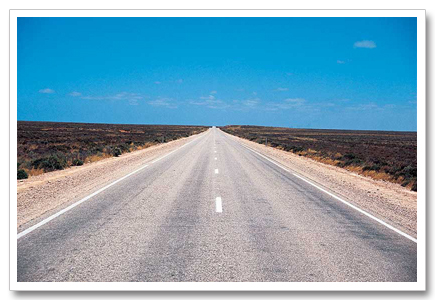 In 1979 my companion Subarata and I travelled from Perth in Western Australia to Adelaide in South Australia via circuitous ways and innumerable adventures, eventually settling out near Port Adelaide and the beginnings of another kind of odyssey.
For it was here we found the Sri Chinmoy Centre. Travelling east from Perth you can cross the endless Nullarbor Plain by road along the Eyre Highway – a 2,700 km epic – or in leisurely fashion on the Indian Pacific railway, gazing out for two days at the vast, unpopulated desert which features the longest dead straight stretch of rail in the world – 478 kms! So flat you can see the slow curve of the earth's rim.
But we caught a ride by car on the edge of that red expanse, shared the journey with two strangers who ended up being firm friends and who gave us four months of work in their outback motel, the Quorn Mill Motel on the edge of another wilderness, the Flinders Ranges. Subarata became the new waitress to the tour bus arrivals, I a charlatan wine waiter and handyman and we lived in a caravan parked up in the dusty back yard of the motel.
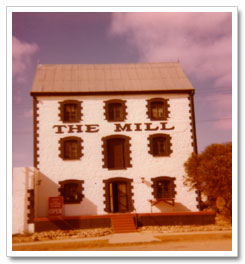 Sometimes our new friends towed our caravan-home 200 miles north and left us for a few days at roads end in the empty, endless hills, their rust-orange escarpments and valleys of pale eucalyptus spread out in all directions. Wandering under extravagantly beautiful sunsets and dawn skies filled with flocks of wheeling birds, their wings turning grey, then pink, then silver as they turned in unison in the first sunlight, an aerial spectacular high up against the blue, exulting in the new day's gift of life.
Three years in the Adelaide Sri Chinmoy Centre followed, then a 'promotion' – a move to Auckland in New Zealand. There, simple living in a succession of small flats, short-lived jobs, our first years littered with abandoned careers. Subarata was a domestic help, motel cleaner, walker of wealthy people's pets, office temp, puller of staples out of paper with the Archives Division of the Department of Internal Affairs – and fired after only three days for wearing headphones at work, which they felt would interfere with productivity! I an arborist, incompetent night auditor, trainee bus-driver, ice-cream stacker, kitchen hand.
 Then we joined forces as a clown duo, Cleo and Koto. I wore a giant pair of polka-dotted pink pantaloons under my clown trousers and Subarata the renegade clown would say a magic word in complicity with the children and my trousers would keep 'falling' down, revealing over and over the spotted outrageous bloomers, much to the mirth of the kids and Koto's dismay. The children howled and shrieked, insatiable for more, almost apoplectic with excitement every time Subarata invoked the magic words and the trousers tumble.
At one Auckland restaurant where I did children's face painting and animal balloons, the entertainment featured a bizarre piece de resistance – two large women wrestling in a giant vat of spaghetti. It wasn't easy for diners to enjoy their meal with a pair of 200lb behemoths grunting and struggling nearby in a great trough of tomato sauce and spaghetti, and the experiment failed, the restaurant closed and I moved on to a salesman job selling sheet metal. Subarata and I befriended the women wrestlers – Natasha the florid-cheeked former Russian baker and Mel, a bankrupt florist seeking quick money to get ahead. We recognised in each other fellow misfits in that secret society of the disenchanted, the silent fellowship of nous autres.
One day we decided never to work for anyone else ever again, no matter what happened – our real vocation lay elsewhere and a blossoming sense of our soul’s deeper purpose gripped our life. An inner call had come.
– Jogyata.
Lonnie Gray
"Friendship is a supremely beautiful gift that God blessingfully gives to His fond seeker-children." – Sri Chinmoy.
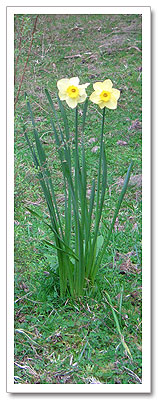 I burnt all my photo albums thirty years ago, a renunciation that left more than a little tinge of lingering regret, but odds and ends still turn up in unexpected places, in the bric-a-brac of a family member's basement or a solitary snap falling out of an old book, falling out of the past. This morning I chanced upon a crumpled old photo of an acquaintance from a long time ago, mythologised in sepia-brown and a whole flood of memories came flying, seeing again, like the light from a far-off star those events from a far-off past.
To say that we remember implies that we might have forgotten, but I have not forgotten Lonnie Gray. Although not in our conscious awareness there is some reality in which everything we have ever seen, done, known, is still there in what we are, a simultaneity in which everything perpetually co-exists. For this reason it's nice to surrender to an impulse of the heart and write a few sentences about Lonnie, who passed away three decades ago, for in this simultaneity we share he too might be touched by this affection from someone from literally another life.
Lonnie was born in 1940, the same year his father perished from machine-gun fire, a rough earth grave in a Polish meadow of war, he the first and last son, misfit scion of the family. His mother, relieved it was all over, marriage and kids, held the wrinkled, bawling pink concoction of flesh and wrappings up at the window, watched the brown flood of the river charging through willows, and this was the first thing he ever saw.
Lonnie might easily have become an alcoholic - through childhood maladies his mother gave him a generous dose of gin as a cure-all – or perhaps too a misfit and introvert, spending a long time as a child wandering alone in the hills enjoying the unconcern of a careless family. But neither came true.
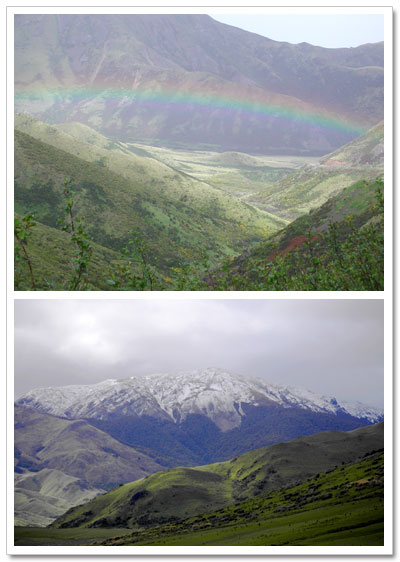 Smart and adaptable he could do many things, fixed cars, felled bush, cut timber from fallen trees and built log post fences over the scalped hills of New Zealand's back country farms, he black as a witch cat from all the fire charred, holocaust wreckage of forests. His sisters went into law and real estate, but the irresistible currents of another destiny tugged him along and he would not beach as his mother would sometimes lament on those lesser humdrum shores of custom and sobriety, drown his free spirit there worse than gin or river water. Instead, a drifter, fell in love, fostered a no-good, sour wedlock boy-child of his own though Lonnie the father would never see his son outside of that first failed year of bickering, dismal marriage. In the little finally left of love, feeling the burden of his own despondency and not wishing to infect a lamenting spouse with his own cloying melancholy, a hopelessness too deep to shift by her or anyone's endearments, he left abruptly, the last of his good times in an envelope by her bed, plus goodbye note in spidery hand.
Lonnie went north, drawn by instinct and memory to the big empty mountains in the central North Island for solace, lick his wounds, hibernate through this deep winter of his life and some sadness as though at something of himself wrenched away and lost, then at a junction of gravel roads that would each lead to unknown and different experiences, indeed to entirely different endings, low on gas and confronted by certain necessities, sat in his station-wagon for all of ten minutes - east, west, north? – tasted the unbearableness of his freedom and the utter randomness of life that would later seem so liberating, then ducked east until he reached the Whangaehu River, stopping at a country pub and meeting there in the public bar my own erstwhile boss who liked what he saw and right there offered Lonnie work.
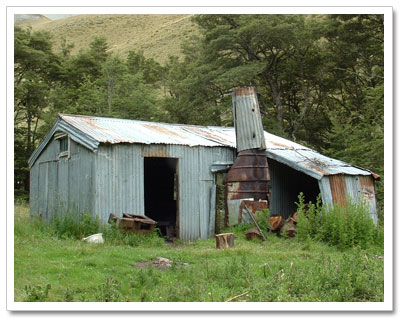
So I first met him there at Mangamahu Station, a rough country farm at roads end where we shared a cabin, a bunkhouse lit by candlelight and moonlight, Lonnie telling yarns over billy tea into the long nights, polishing the bolt on his Lee Enfield and linseed oil into the weathered stock, one reliable thing in his makeshift life at least, so he said.
Once, just a kid, mother at the wheel of a rattletrap car, they confronted on a single lane bridge a runaway truck, 1,000 gallons of churning fresh farm milk sloshing in the steel tank, brakes gone on a long down haul of twisting hill roads – the Maori driver made it on to the bridge, needle over ninety, and then had to choose. Just before impact and the certain end of Lonnie's entire family the driver chose the brave hard way, swung fiercely and sent himself and the trailer of milk down 200ft into a rocky creek bed. The water ran pure white for a whole day, a river of milk, before they hauled the wreck out. He remembered it for a long time afterwards, the intensity of a near death, the runaway truck hurtling onto the narrow wood railing bridge with it's steel trailer swinging wildly, the sacrificial face staring at them through the windshield of the huge cab then shouting something, death cry of resolve, decided, swinging away at the last moment and the unbelievable roar of 10 tons of steel and machinery smashing through the bridge sidings and down into the gorge. Then the shattering impact below and the howling truck engine, going on and on as though boring into the earth, relentless and amplified in the rock walls of the ravine, the dying crescendo roar of a giant beast – then sudden silence.
 Lonnie's mother went to church for a full month after to praise a God she hadn't found too much time for before, gave a big chunk of the weekly welfare cheque to the driver's grieving family, three fatherless kids, trapped in a part-share state house.
How can you ever repay that said Lonnie. But life's ledger balance didn't work like that, a quid pro quo of reckonings, nor his own later sufferings fit into any tidy cosmic scheme of compensation.
Big gaps here open up in what I remember but years later, a husky phone call, remember me?, a late night rendezvous and re-acquaintance with this man I liked. And even more years later I heard of his end, a felon sought by country police half-hearted in pursuit of a character they secretly admired, car conversion, his own station-wagon long gone and Lonnie back to country work in a stolen rig, scrub covering the number plate, far up on a hillside felling trees and a farmhand rides up, cops looking for you Lon, saddles up a horse and puts the Lee Enfield into a scabbard, saddle bag of food and heads up to the back boundary and beyond into history. Rides way back where no one goes. A survey team finds him months later, long dead on the floor of his hut God only knows of what. Under the wool bale sacking of his bunk bed a manuscript, handwritten, story of his life, but no chance of recovering it from the police back then. What ever happened to it? All those stories from a life disappeared. I wish you all happiness and a safe passage on your journey.
"The vine that binds two friends together is adorned with gratitude-heart-blossoms." – Sri Chinmoy.
– Jogyata.
My Old Man
At 5am it's pitch black and Uncle Tom, my dad and I – a wide-eyed twelve year old – skirt the perimeter of the airfield under cover of lingering night.
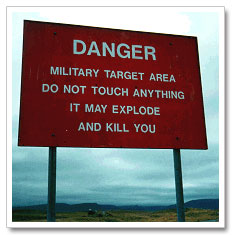 Tom's ssshh warnings, finger to his lips, heighten the sense of danger. He wraps his coat around the barbed wire fence to stop a bisection and we crawl through, my father's boot holding down the bottom wire to widen the gap. The red warning flag hangs limply in the dark, the 'No Trespass, Bombing Range, Live Munitions' sign unreadable and ignored. Then single file we go, weaving out across the lupin plains and cratered dunes, forbidden military lands, waiting for dawn and the hunt to begin.
At daybreak the first quail blast out of the lupin on panicked wings and Uncle Tom wheels like a pirouetting matador, a scythe of shot from his twelve gauge scattering among the birds. Twenty metres away and slightly forward, my father takes the edge of the shot in his head – a tiger's paw raked across his scalp, perfect parallel striations, forehead peppered and ballooning out, a pink leaking party balloon, tumbling him backwards into the sand.
Piratical in makeshift bandages, wrapped in Tom's bloodied strips of shirt, he stumbles back the way we came, trailing red splashes a blind hound could follow, headache big enough to curse the moon. Uncle Tom and I listening in retreat for sounds of the approaching jets.
Gunshot and bullet wounds interested the police, so did poaching out on the bombing range, so discreet Dr. Singh is called and quietly does the needful, probing and plucking grey metal from their lodgement up against the skull, chuckling and bobbing his head with pleasure as each piece of mashed shot falls – ting... ting – into the enamel pot. "We'll leave some there for keepsake, too deep in." says Dr Singh and later my sister would count the healed grey lumps in his head, seven in all, while my old man relived the story over. "Careful not to push too hard," he'd warn, "or I may go all unpredictable with the pain of it!" My sister would push a little harder, carefully, watchful for some change. And suddenly he would roar and gnash his teeth and grab her arm to his mouth, his dentures clacking away in a fury of near misses while she shrieked and flailed her arms and writhed in his lap.
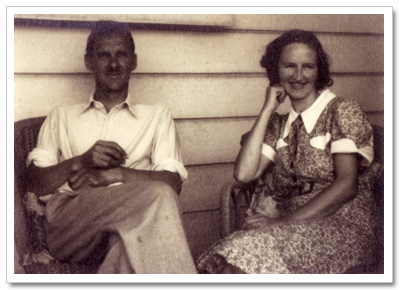 My fathers hands were scarred – old cancerous lesions, cheese-grater welts, turkey-wattle scars from the war, a white latticework of wounds from that time the home brew in his garage exploded. "God not the brew!" he cried when we heard the boom down in the basement, and he rushed downstairs, more wounded than the shotgun blast, fearing the worst. There we found him, fumbling about and opening up his hands on the glass, living yeast like an alien invasion over everything and us kids licking the frothy beer off the furniture in delight.
At the end he couldn't remember his wife Anne, married fifty years, but the war years were rolling back in his mind and on his midnight stumblings to the bathroom he was weaving down a galleyway on the Oranje, a rough night at sea, the ship with it's groaning wounded soldiers climbing up the sides of huge Atlantic rollers and shuddering down the other side into green troughs, bow embedded in the icy seas and struggling to shake itself free, propellers clear of the water and whining, he waking the house with his nautical cries or back in the sheets sobbing for his lost comrades.
"God, Noel, you might have been killed!" my mother cried that time the home brew exploded. Yes, indeed. But he might have preferred it like that, shot through with flying glass from the ruptured vat, a firing squad of yeasty shards tumbling him down into a brown swamp of the failed brew, or out there on the bombing range at dawn with his Winchester and his son, taking his chances, exulting in the tang of cordite and fast quail wings and the euphoria of endless open spaces warm inside him, a bottle of the brew in his carry-all, before a blast of buckshot, two inches lower would do it, brought him down.
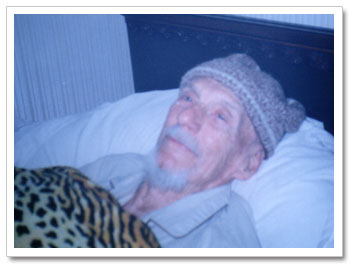 Better surely than this, forsaken in a state bed, larynx opened up to go the distance, dying slowly of everything – heart, cancer, liver, regret – his seven grey gunshot pellets shining through the pallor, gnarled hands flapping the covers, watching another evening fall, listening for the sounds of a car that might bring his son, waiting tired for the end.
Here's the last snap ever taken of my father. Our fingers are intertwined, a communion much deeper than flesh. He smelt of his forbidden pipe tobacco and fresh hospital soap – and something else. Does remorse have a fragrance? He is looking at my face as though to indelibly remember what might already be lost, for the darkness both of night and mortality pressed heavily. You could feel the oppression of his sadness, picked up through the osmosis of love and clinging like the scent of the hospital soap.
Later driving north and home you pull over onto the curb, face screwed up in your sorrow, a contortionist's weeping mask and stare out at nothing. Then on into the balm of distance, through urban heartlands with their backyards of trash and shame; past billboards of Carribean holidays where pinup girls loll and smile on flawless beaches, past scrap metal yards and junked cars bleeding rust into the lifeless earth, a graveyard with it's wistful rows of faded plastic flowers. Then a bridge over a swollen, braided river and out into countryside and stubbled fields where mallards swoop for grain. And now an oil-slicked marshland where long lines of cormorants stand, black silhouettes against the bright sheen of water. Their wings were outstretched in perfect unison, an avian ballet, craving the consolation of the sun.
– Jogyata.
Childhood Heroes
Memories from my childhood are generously sprinkled with larger than life characters, heroes who touched and shaped my life in quite enduring ways.
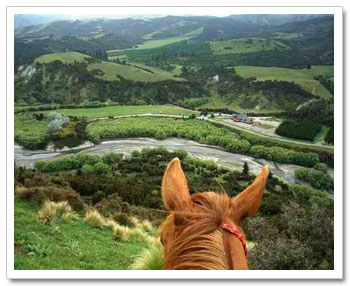 My first hero was a quietly spoken farmhand and horseman who spent his short life in back country New Zealand and I was just a young kid. Alistair took a shine to me and taught me things about horses and how to survive in the hills and how to read animal signs and how to place a bullet from his rifle into a tin can 200 metres away every time you pulled the trigger.
When the first lambs were born every spring, Alistair took me hunting the wild boars that came out of the dark wet forest at night in search of easy prey, and we would ride quietly through the pre-dawn darkness out to his favourite spots. I would hold the reins of the nervous horses and when Alistair's big calibre rifle boomed out you could smell the cordite in the air and I remember being frightened because I had seen the rows of tusks nailed to the shearing shed wall and knew Alistair's stories about every one of these and his numerous brushes with death.
Some times Alistair would yell get up a tree, boy! and I would turn the horses loose and shinny ten feet up a manuka tree while Alistair waded through chest-high fern towards a wounded boar and you could hear the animal snarling and charging the dogs, defiant even in the wretchedness, bloodiness and brutality of it's death. And then the boom from the rifle and I would go down and he would tell me I was a brave kid.
One day Alistair went out without me and that was the last time I saw him alive – when he didn't return a team of silent riders went out looking for him and found him dead under his horse. His mare had slipped and rolled down a steep hillside and he had died during the night. Now, a lifetime later, I can't remember his face but I remember his rough kindness and the tears I shed that day and the smell of his grey wool coat when I sometimes rode behind him, before he trusted me with my own horse.
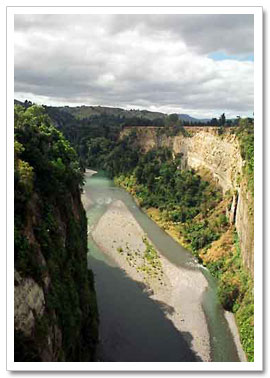 Later Colin came into my life, a big bear of a man who had recklessly married my sister. Colin was an incurable romantic who loved the wild ways and for a couple of years I followed him around while he looked for precious gemstones in remote mountain places and trapped opossums for their furs and hunted deer for restaurant venison. Colin’s blue eyes held a faraway look – he was always peering into the future and dreaming new dreams, cajoling my sister and I to share his many adventures.
Colin loved the outdoors – we were the first long ago to float down the Rangitikei River from it's earliest navigable waters to the nearest road, six days of white water travel down a series of beautiful valleys filled with deer and beech forest, the river tumbling down into vertical walled canyons where great columns of eroded stone – eerie as gargoyles poised to explode from their frozen sleep – towered over dangerous chutes and steep falls where you thought you were going to die.
One winter we climbed onto the tops of the Kaimanawa Mountains, years before an alpine track was pushed through, and the hike from the valley up to the bushline was sixteen hours of hard ascent through dense forest filled with snow. I can still see Colin, draped in heavy pack and rifle, pushing on through the dark trees as night fell, huge bombs of dislodged snow pelting down from the overhead canopy of trees and him shouting encouragement as the cold bit into our bones, his blue eyes blazing with the light of battle and the intensity of his will.
It was on one such expedition, this time in summer, with our outfit camped on the edge of a wilderness an eight hour hike from the nearest road-end, that Wild Bill Cornelius rode into our lives. Bill was 6ft 4 with unkempt hair down to his waist and a nut-brown face tanned from a lifetime living outdoors. He was almost permanently on board a tall, rangy bay horse and he swept into camp that day with fourteen wild cattle dogs streaming out behind him, the stuff of legends written all over him.
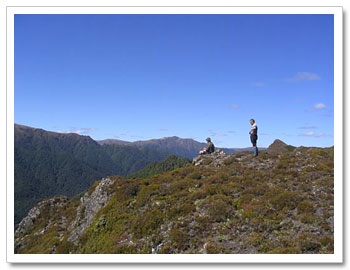 Bill hunted the wild cattle that roamed in the vast, densely forest catchment of the Whanganui River and would drive his quarry down river valleys and ridges to holding pens on the edge of this wilderness. His dogs lived exciting and often short lives hounding these angry and very dangerous beasts and most bore scars of battle – his horse too was covered from chest to tail with old silver-grey welts and red new wounds, many from charging through dense vegetation to escape a charging bull.
How Bill rode a horse through those steep and slippery and trackless wastes I could never figure out, but at work at our own grim trade we would sometimes hear Bill's dogs furiously barking miles off in the hazy blue mountains and we would stop to listen to the unfolding saga of the hunt as the sounds of pursuit moved down the valley, and we would marvel at his courage and the hardship of his chosen life.
On the rare occasions Bill shared our lonely camp, we would sit around the fire and I would be silent with wonder at the colourful escapades shared by my older companions.
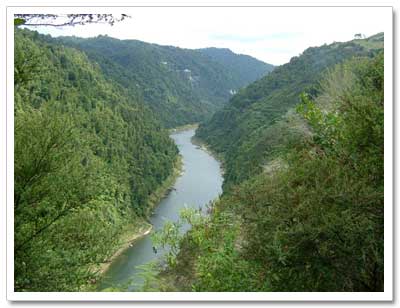
When I was eleven or twelve, another childhood hero we called Uncle Archie played a big part in our youthful lives. Archie lived in a small village called Turangi, under the shadow of volcanic mountains and alongside the beautiful green Tongariro River and we often were sent there, a long winding day trip by bus from our saner family home to the south. Archie was outrageously colourful and eccentric, a World War II veteran whose views on life were filled with extraordinary assertions and prejudices.
 Archie revelled in adversity and loved to find issues and aggravations to rebel against – like the traffic roundabout that one day was unwisely installed on his, Archie's, street! With us shouting encouragement from the back seat Archie would sometimes drive at the roundabout, foot pressed hard to the pedal, and we would fly directly over this latest affront to Archie's sensibilities, almost airborn, shredding the cosmetic shrubbery placed in the middle and landing on the other side with a bone jarring crunch, every rivet and bolt in the old car groaning as we returned to earth. And us triumphantly whooping and Archie shouting his war-cry expletives.
Archie had smuggled a handy relic from his war years back home in his duffel bag, a huge .45 calibre military handgun, and this treasured piece of antediluvian artillery lay concealed under his bed, appearing only on occasions of drunkenness, provocation or maudlin bouts of World War II reminiscences. On these latter occasions, Archie would lovingly caress the grey barrel of the old colt before a riveted, wide-eyed audience of neighbourhood kids and recount harrowing tales of endless near brushes with death. More was yet to come. The climax of these wondrous occasions was a glimpse of Archie's right leg – two rounds from a German machine gun had left a couple of neat indentations in one side of his calf and larger, jagged exit wounds on the other side. We would crowd around him, gazing at the long ago wounds while Archie for the hundredth time relived those chilling days in a voice dramatic with tension.
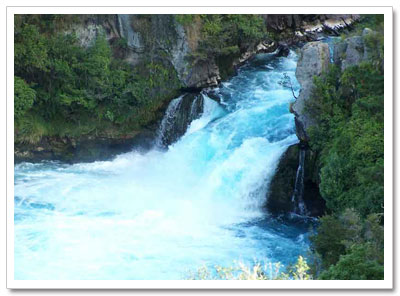 As a child I remember him snatching his beloved .45 from it's place of concealment beneath his mattress and discharging five thunderous and randomly placed rounds into the night when a prowler was heard, his voice roaring in the darkness long after the reverberations had died down – "prowl around my house you heathen savages and I'll blast every one of you to Hell!" In my memory I can still hear the boom boom boom cannonade of the heavy colt and Archie's voice, laced with profanity, echoing in the night. And we kids, giggling nervously in the sanctuary of the house while dogs yelped and raced for home, tails between their legs, and lights came on all over the village as Uncle Archie purged the darkness of heathens and savages.
Archie often tested our child's composure with fearful and fictitious challenges, like the time he invited us to join him in paddling over the nearby Huka Falls in his small fishing dingy. This raging, high velocity cataract of green water tumbled down through a steep and terrifying gorge before plunging over a vertical drop into the mesmerisingly beautiful and deadly falls, powerful enough to turn Archie’s dingy into kindling and crush the air out of our lungs like a burst balloon. "By God," he cried, "we'll ride that wild river at dawn tomorrow and we’ll conquer it together. Who'll join me?" and he glared at us in challenge. I would stare at him, eyes wide and shocked in silent disbelief – my sister who adored Archie would gulp and stare at him then blurt out "I'll come with you Uncle Archie." Archie would gaze at her with pride and pleasure, his delight shining in his eyes, "You'll do," he would say, "You'll do."
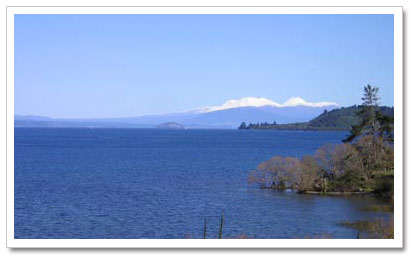 This was Archie's highest accolade. How I longed to hear him say these words to me. A year would pass before I earned this cherished affirmation of my own courage from Archie's lips. One evening, out fishing on Lake Taupo, a sudden squall blew across the great expanse of water. Archie decided to call it quits and pulled lustily on the old Seagull motor to begin the mile ride home across the rising waters. It wouldn't start. Archie gave a mighty heave on the rope, enough to hoist the small motor from its mountings, and unsecured by a safety chain it dropped into the lake and sank 200 feet to the bottom. "Start rowing son," he roared, "or we'll drown tonight or freeze solid in the wind."
For two hours, through frigid winds and rising waves I battled towards the shore, a boy against the storm, my hands blistered and running with blood and shoulders aching from the strain. Watchful and silent, Archie was a dim shape in the rear of the boat as waves smashed over the bow and spray soaked us to our skin. At last in the darkness the keel grated through the surf and onto the shore. Archie stepped triumphantly ashore and tussled my hair and grinned at me. And then he uttered those wonderful words: "You'll do," he said, "You'll do." My face flushed with pride. I had won Archie's approval and in that moment knew I had crossed some mysterious threshold into manhood.
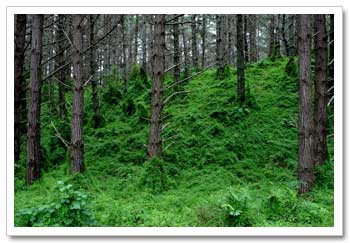 Archie deeply loved his wife and she him, enough to overlook his many bizarre mannerisms. Sometimes when we were away they would sit on the couch together and Archie's head would lie on her shoulder and would sleep. If we returned, Archie's wife would go "sssshhhh" silently, her finger to her lips, for Archie would not want us to see him this way, the fiction he presented of himself to us betrayed in this most vulnerable and trusting and childlike abandonment. When his wife suddenly and mysteriously died, Archie was never the same and often fell into long bouts of inconsolable melancholy, shuffling through their old snaps and albums of their life together and weeping. When Archie cried like that, if my sister was there she would sit on his lap and cry too, and pull all the fingers on his scarred hands, one by one, as though exorcising his sad demons.
These times of sweet affection were the most treasured and happiest of his entire life and the dying and death of his wife the most excruciating, more awful than all of his years on the battlefields of Europe and the pathos and remorse of everything he had seen, been, done. "Never love," he said to us, "never love, the bitterness of loss is too much for the heart to bear."
Where have they gone now, these larger than life characters who populated my childhood? Eventually our lives took a different road, and we would never see them again. But I still remember and often smile. Sometimes even now, caught out in the night forest very late on a wayward run at Muriwai far from anyone, I can feel their spirit with me and Colin saying to me, "You cannot have courage without first having fear. Courage without fear has no meaning." And I can push on through the dark forest on the way back to my car, smiling in my fear.
– Jogyata.
Seize the opportunity
by Nishima Knowsley, Auckland
When it feels right to give something a go – seize the opportunity!

Helping two of my very special friends in multi-day races have provided some of the highlights of my life. My friends would be running distances ranging from a six day race to the 3100 mile race run - up to 52 days. Being there for a runner 24 hours a day, assisting them with whatever they need to keep them moving around the course is a fantastic experience.
Although I loved helping the runners it never crossed my mind for more than a fleeting second to enter a multi-day race myself - until one day. The 7 Day Race organized by the Sri Chinmoy Marathon Team had just been changed to a 6 Day Race to be held in May the following year on Ward Island in New York. When I heard about the race this time something deep, deep inside me said - "You should run it." My mind barked "What!"
I had had enough experience with my mind not to let it have a say, it had never thought a training run for more than 2 miles was necessary. I started training in September with daily runs of an hour and longer runs in the weekend. In February I started apple picking so the training schedule changed from running to apple picking for the next two months. This unorthodox training suited me well. I was on my feet all day not only strengthening my legs but getting an upper body workout as well. The added strength helped later in the race when I combined race walking with running. One of the best training aspects apple picking offered me was that I needed to concentrate 8-10 hours a day on a repetitive activity, perfect preparation for running a 1 mile loop course for 18+ hours a day.
I arrived in New York with not much of a game plan. Other runners were discussing what mileage they would do and different strategies. My strategies were to pray a lot, just keep putting one foot in front of the other, stay in a cheerful frame of mind and a good mileage to aim for seemed to be over 300 miles. Music played a very big part in keeping my mind occupied. (Sri Chinmoy's music and River Dance worked well.)
With a lot of Grace I had a fantastic race. Despite 5 ½ days of rain I had no blisters, no lingering injuries and stayed happy for all but 1 mile of the race. Someone was looking after me!
When my mind comes up with every excuse under the sun not go to out for a run and I reflect back on the 6 Day Race, I am still amazed that I covered 2 marathons a day for six days. I am very grateful I seized the opportunity offered and went way beyond where my mind thought I could go.
Joys of Horsemanship
Weekends of carefully planned fun – the term ‘joy weekend’ is often optimistically applied – can be unpredictable affairs. Oh dear yes...
Once, filled with a nostalgia for childhood ponies and leaf-lined country lanes, our Auckland Sri Chinmoy Centre planned a horse riding venture, no experience necessary. And off we went one perfect Sunday morning, out to the West in our convoy of ageing cars to relive again the joys of those halcyon long ago years, the sweet tang of leather, the joys of horsemanship, a gentle steed carrying us through sunlight dappled forest.
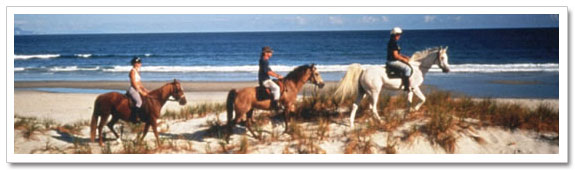
But on this particular morning, only halfway through our journey, the intended plot began to unravel. One gentle steed took exception to another gentle steed and without any apparent provocation nipped it suddenly in the rump. The victim reared dramatically up, deposited its inexperienced rider into a large path of Scotch thistles then bolted for home. The nipper, sensing retribution, also decided to head back to the stables with or without the co-operation of its rider, and suddenly the morning was losing its romantic appeal. Caught up in the excitement of this sudden turn of events another hitherto docile mount now surged off the narrow trail and thundered into the trees – only twenty metres into the forest a low branch swept its rider to the ground with a bone-jarring thump.
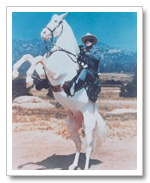 Out of the corner of my eye I could see a new disciple, Keith, sitting on a white mare like a retired cavalry officer, ramrod straight spine, grasping huge handfuls of mane in a desperate attempt to stay on board. “The reins”, someone yelled, “grab the reins and haul back. Take control!” but Keith’s eyes had glazed over in a panic of disbelief, unresponsive and frozen in the saddle. It was his horse, imagining the customary bucket of oats back at the stables that was now fully in control and turned for home, a grim faced Keith bouncing around like a sack of potatoes on its back as it departed down the trail. Everywhere horses were wheeling, snorting, tossing fractious heads like race start at a derby, anxious to run hard. A melee of riderless horses, people shouting.
Eventually though order was restored and we headed back, dislodged riders dusting themselves off and doubling up on the journey home. Back at the stables Keith was crouched over a consoling cup of tea, several runaway horses calmly cropping grass in a nearby paddock and pretending nothing had really happened. “That was fun”, Keith said miserably. But sadly, we never saw him again.
– Jogyata.
- ‹ previous
- 111 of 125
- next ›

Except where explicitly stated otherwise, the contents of this site are licensed under a Creative Commons Attribution-NonCommercial-NoDerivs 3.0 Unported License. read more »
SriChinmoyCentre.org is a Vasudeva Server project.