
My Parents
Two stories about my parents...
My Mother
There is a story of the Buddha that, when he first attained enlightenment, even the animals and birds of the forest gathered around him, drawn by his radiance and light. Later, the story goes, as he advanced further in his realisation and wandered in the world to serve others, the birds and animals did not notice him anymore – he had gone beyond that initial realisation and now no self was left to be noticed.
As a seeker this simple story inspired me and reminded me to look for saintliness and spirituality in humility and egolessness rather than in the more overt and obvious manifestations of stature by which we measure others.
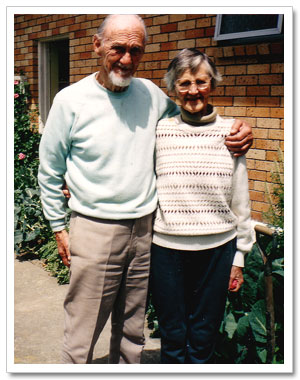 My memory of my parents, particularly my mother, is coloured by this perception of things – I consider myself fortunate in having charitable, humble, kind-hearted and loving parents who, even now that both have left this world I remember with much admiration and a reciprocating love. Like her life, my mother's departure from this world was gracious and simple and touched by a certain humility, humour and charm.
I remember her last valedictory wave out of the window as I drove away from our last time together, her face at the window by her bedside, hand aloft, goodbye goodbye. At her funeral Subarata and I played Sri Chinmoy singing Phire Chalo and we read passages from his writings on the nature of life and death – and that the secret of life is that there is no death. I remember that there was a certain feeling in my heart, as though I was participating in or glimpsing some event or experience in the inner world to do with the departing soul.
A month later in New York, I was meditating on the benches while Sri Chinmoy played tennis, and then quite suddenly the same feeling came and I knew my mother was there. At that moment Sri Chinmoy stopped playing tennis, walked back to his gazebo and sat down – then called me over. He told me that my mother's soul had visited him on quite a number of occasions – "In fact," Sri Chinmoy said, "your mother's soul was here just now." I said, "I know Guru, I believe you, just now I really felt she was here." And so Sri Chinmoy confirmed outwardly what I had felt inwardly.
Sri Chinmoy won my mother's heart years earlier on his first visit to New Zealand, in a flute store in Auckland. I introduced her and said, "Guru this is my mother Anne." Sri Chinmoy stood beside me and put his hand on my shoulder and smiled at her with that exquisite divine smile that only he has and said, "I am so proud of your son." That was how in that simple moment my Guru stole my mother's heart.
A Handsome Man
In his last hours at the end of his life, my father lay in a hospital bed, and a very beautiful and powerfully meditative photograph of Sri Chinmoy was on an adjoining table. It was a warm afternoon, kids were playing in a park outside. My father's life was ending, theirs were just beginning – their cries and laughter could be heard in the still room. Then a nurse came in and, mistaking Sri Chinmoy's photo for that of my father, commented, "My, but your father was a handsome man when he was younger!" She found Sri Chinmoy in his meditative aspect to be very handsome.
– Jogyata.

Heart Surgery
Prior to Shardul's fourth open-heart surgery in Auckland, we were sitting in his hospital room waiting for the pre-surgery procedures to begin.
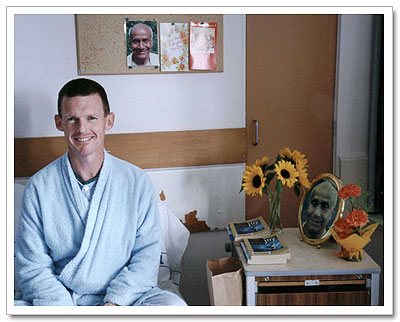 First up was a legal waiver form to be signed, and when the surgeon asked if we clearly understood the nature of the operation we pretended we thought it was a kidney operation! Shardul said, "You're going to open up the abdominal area and remove my left kidney and inspect the other kidney for damage as well, right?"
The surgeon went pale before our eyes and gaped at us in astonishment. Eventually we started to laugh and she realised we were joking, clucking at us in mock disapproval.
Shardul looked ridiculously like a plucked chicken in a bathrobe and every time I looked at him I started laughing. He had been shaven for the operation and wore a white surgical gown and a frilly plastic floral cap over his head, vaguely resembling a female impersonator who had been run over by a car.
Once on a pre-surgical anaesthetic he started to slur his words as well when he spoke and we started giggling like a couple of schoolboys at the ridiculous things he was saying and the comedy of his appearance. Then they wheeled him off and I thought, 'My God, we may never see him again.' I realised then what good friends we were though I knew as well he would be OK because of his connection with Sri Chinmoy.
Later I went back to the hospital to check up on him after surgery – he looked ashen and terrible as he slowly fought his way back from the huge trauma of a four hour long operation. Then I understood what a miracle and what a resurrection it really was.
During the post-op stage we sprinkled copies of Sri Chinmoy's The Wings of Joy among the medical staff and nurses, and even ran into former Prime Minister David Lange, also in the cardiac unit for some running repairs to his heart. He had endeared himself to us years earlier when, during a chance encounter in 1995, he perfectly recalled the song Sri Chinmoycomposed and performed for him during their meeting in 1987, and sang it to us word perfectly.
Sitting in the hospital room by the window one afternoon I wrote Shardul a poem and put it by his bed as he slept. Somehow it disappeared, probably thrown out by the cleaners, but I recall it close enough to recapture.
POST-OP
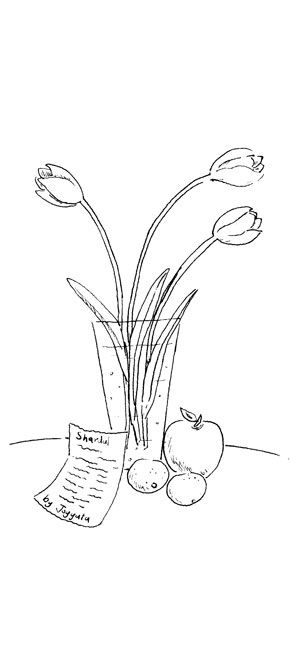 Here, calm nurses reign
and sagacious doctors, majestic in white
confer and scurry about.
Green lines track and blip across the screens
that measure breath, groans, heartbeat,
evidence of this, your latest resurrection.
Outside, a pastoral scene
meadows bursting upwards
jubilant with spring, seed-heavy,
fragrant with a million
scarlet flowers, haven of finches
and twittering, earth-bound things.
Your own sap blooms
through scars and crimson bandages
and leaking rivulets, missed by errant nurses.
A clock ticks softly
reminding us what’s left
and other certainties of time
that all must pass this way and be bereft.
Beyond the window other lives
unfold in play
and idle cattle stand
then nomad clouds, a caravanserai
in convoy voyage aimlessly across indifferent sky.
The white sheet immaculate
hides your grief and wounds.
A pulse flutters briefly in your neck
a trapped insect trying to get out.
You lie, waiting
inert upon the bed,
pale Lazarus, companion-friend,
returning from the dead.
– Jogyata.
Notes from the Garden City
Christchurch in winter. Our meditation centre is offering a concert at the Arts Centre and I was here to join in the performances.
With an hour or two to spare, time to wander a little. In the parks and streets some charming things catch your eye. An old man and his dog were performing tricks before delighted children. The dog had a skateboard and upon an imperative from his master would put first two, then four legs on his improbable toy, riding a gauntlet of applause towards his masters welcoming arms. The dog could catch proffered coins, one, two at a time in his mouth, depositing them delicately into a black felt hat. Click, click, the coins rattled against white teeth – high in the air the old dog jumped to fetch their keep.
Across in a nearby square a large Maori man in a wheelchair was playing a guitar and singing a romantic lament. 'Why, why, why Delilah?' he sang, but Delilah would not be charmed by this particular suitor – one leg ended at the knee, a polished metal stump, the remaining diabetic limb a swollen festive red and also destined for the surgeons knife. But his buskers hat was filling with yellow coins and the compassion of the audience would more than compensate for the unattainable Delilah.
"God will make you one with Him if you know the meaning of silence."
Such a bright afternoon. A watery sun cast long cold shadows over the bustle of market stalls, hot food caravans, tables of lunchtime diners. Rapacious pigeons strutted among the tables and furled umbrellas, feasting unmolested on scraps. The stalls were labyrinthine, a maze of charming things – translucent turquoise pendants carved from mountain jade; fossilised woods, the relics of ancient forests, sculpted into prancing horses and dolphins and secret miniature chests; musical boxes that tinkled merrily when you clapped your hands; beeswax for cracked feet; booths of strange, aromatic potions and remedies; sweet sounding wind-chimes tumbling down from archways; handspun woolen jumpers redolent of the high damp hills. Fortune-tellers and tarot readers plucked your sleeve as you wandered by but no time now to peer into the future, the present is beckoning and the concert hour draws you near. In the evening after the concert so many stories of the path...
"The flower of the life-tree is wisdom. The fruit of the life-tree is peace."
Anurakta, spiritual brother and weekend host, lives alone in a first-storey room. Several natural hazards guard the entry to his flat. First a watercourse – a burst pipe has flooded his entrance, an accidental moat – you leap across deep pools, balance on little islands of gravel before leaping to the next – sodden socks and shoes will punish an errant step. Now you must navigate a perilous outdoor stairway, a decaying wooden structure that takes you to his first floor door. Careful! Near the top a section is missing, a yawning hole to the roof below – you grab the wobbly handrail and haul yourself over vistas of rusting tin. You enter, heart pounding, but yet a further trial confronts you. Now you have to walk the plank, literally! Here a five metre long narrow piece of timber that joins two unfinished sections of his flat. Below you a gaping, lunatic stairwell, the work of a demented carpenter. On a dark and awful night you might step into the brackish moat, miss your footing on the ruined stairs and plunge to the roof below, then step off the plank in some hellish finale.
"Use your heart and you will see God in all human beings."
Evening comes, the horizon a vivid apricot fading up into shades of blue, a deepening indigo. Nature's castaways had reclaimed the empty spaces. A malnourished cat crossed the square, furtive, glancing back from table legs and random shrubbery as though in dread of some invisible pursuit – indolent with satiety, emboldened by numbers, the languid pigeons watched from tabletops, too full to fly. Bereft of his jolly masks and masquerades the old man sat alone on a park bench. A plot of fenced new grass surrounded him, and orange tape warned off birds and trespassers, but he was exempt from all censure, an old performer at the end of his days. Exhausted by the antics of his trade he sat on the green bench, half toppled over like a falling tree, his black coat riding up against the backrest. His head lolled sideways, tucked under the trapped coat like a bird with its head beneath its wing. Gravity, age, weariness had descended. His grey-muzzled companion lay a short distance away, spread-eagled without care on the soft grass, a wind-up toy suddenly expired. The little dog twitched in his dreams, reliving his pavement rides or dreading the encores, the insatiable clamors for more. Delilah's would-be paramour had also disappeared and the courtyard had emptied of diners and strolling sweethearts. Life had drained out of the square like a receding tide, only silence and the cold grey flagstones remained. Tell us more stories, more stories of the Path...
"Every action of ours should be to please God and not to gain applause. Our actions are too secret and sacred to display before others. They are meant for our own progress, achievement and realisation."
I return to Auckland on an early flight. Below, dark mountains are mantled in snow. In the deep alpine valleys a pre-dawn mist was everywhere gathering like an assembling army, silent and predatory, advancing slowly up the side catchments and creek beds and blanketing the lower mountains from sight – in it's vanguard frail probing fingers of translucent white were sliding up the gullies and searching across the shallow depressions of rock, summoning the white blanket of fog that finally assailed even the higher peaks in an all-enveloping cloying soup. Through my plane window a sudden glimpse of a pale quarter moon riding fast dark clouds. Below on the mountains, escarpments of ice winked pale moonlight, a gleam of yellow, then gone.
"Obstructions loom large within and without. Nevertheless, like a kite I shall rise without fail against the wind."
All quotes on this page are by Sri Chinmoy.
– Jogyata.
At The Beach
Dozing on the beach I am set upon and buried in the golden sand then decorated...
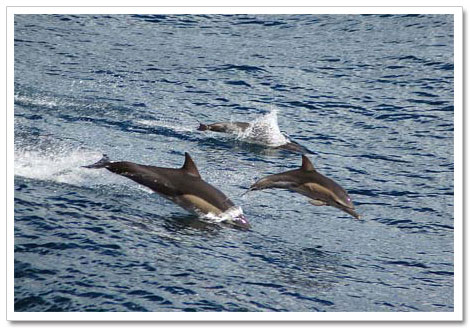 It was Kid’s Adventure Day in the The Auckland Sri Chinmoy Centre and we drove two hours north to a remote, unpopulated beach. Clear pure water, large waves thumping on the shore, a long sweep of empty coastline receding away into silhouettes of far-off, pale mountains. On the horizon great columns of cumulus cloud were banked up, colossi poised to march, imperious and towering over the empty wastes of sea. Ours the only footprints in the warm sand, all trace of others swept away by night tides.
Now squeals of joy from the children as we tear off chunks of fragrant brown bread and white cheese, devour fresh mandarins brimming with sweet juices from the orchards of Kerikeri. Dozing on the beach I am set upon and buried in the golden sand then decorated – only my face visible – with starfish, seashells, sea scraps dumped by the last tide. My poor head, burning in the sun. Then someone shouted "look, look", and out there, a stones throw from the shore, the black shapes of dolphins moving in the sea. And we all rush out into the waves, wanting to befriend our new arrivals. And sad when they eventually move away.
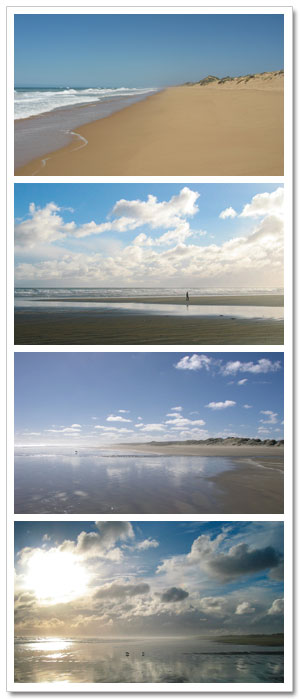 Here at land's edge, this meeting place of earth, water, mountains, sky, we bask in the feeling of our country – nature's peaceful beauty, islands shimmering in the sea, a nostalgia too for something undefined, waiting out at the edge of memory. Rummaging now in the lunch box for some scraps of paper, wanting to scribble a poem. 'Turning blood into ink', as someone said...
CHILD-SWEET
Your love prised me open like a clam
numb heart
opened to an oyster pearl
of giggling joy
nose twister
bouncing on my poor chest
like a mad puppy
growling in my ear
tiny hands pushing flesh
into a dozen pleasing shapes
putty face stretched into a
samurai, frog and monster.
And now you deck me out
in nature's finery,
a beached, snoring Neptune
bejeweled with flotsam from the sea–
cat's eyes and kelp, pale sea lettuce
bleached herring bones and
coral shards for teeth.
Aroused from my mock sleep
I rear up, roaring
and you rush into the sanctuary of sea
shrieking from this monster you've created.
Under a warm sky
I cast off clinging robes of kelp
spit sand and guard
your playing in the tide.
Child-sweet, brief thing of flesh
I guard your playing in the sea
with my own quiet eyes
of love.
– Jogyata.
More Horse Stories
I recall on my 30th birthday consigning an armful of photo albums – the mythology of one's life – into a garden bonfire...
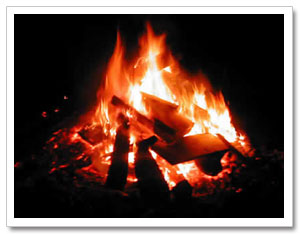 Shardul's horse stories have unleashed an avalanche of equestrian memories from my own past, and time spent 'in the saddle' in back country New Zealand. Most are connected to those hunting and safari guide days that are best forgotten and un-retrieved – who wants to peer back into those early chapters of our lives and shudder at what we were or might have remained?! I recall on my 30th birthday consigning an armful of photo albums – the mythology of one's life – into a garden bonfire and firmly turning my back on this whole chapter of my life, a mad yogic act of renunciation which I faintly regretted in later years. I even learnt to roll a cigarette while riding on a galloping horse (got you there Shardul!!) but all photographic evidence of this monumental achievement went up in smoke on that fateful day of the bonfire.
I do though have fond memories of a horse called Trigger, a gentle white Palomino that my wife Subarata and I had owned during our first years together in New Zealand. Reclusive by nature, Subarata and I lived in remote places, often going for months without seeing anybody. Subarata acquired three pet wild pigs, two vegetarian border-collie dogs called Scruffles and Scobie (see: Puppy Power Revisited), four nameless hens, two zebra finches and a lamb with tons of personality called Darley. Later Trigger joined our family of animals.
Darley the lamb was raised from birth with our two dogs and developed a life-long identity crisis, hanging out with dogs and humans and shunning the company of other sheep. Later, as an unusually large and self-confident ram, he was given away to a city lawyer with two Labradors who wanted an alternative means of keeping his lawns short. Darley happily retired to the city with his new family, ever disdainful of his own kind and the quiet country life. Trigger carried us around the forest and mountains for a year, then when we had to leave our mountain hide-away, we turned Trigger loose and never saw her again.
 Subarata was scheduled to leave New Zealand in three months, so in the small South Island town of Motueka we got married in a registry office. We were both indifferent to marriage, so there was no ring, no flowers – it was as meaningless as signing a bank deposit slip, but it enabled her to stay. We never bothered telling anyone until about five years later when I said to my mother, "By the way did I ever tell you we got married?" She was mortified that I had never told her, but finally she laughed and hugged us both. My mother loved us too much to be upset for long.
Later we moved with Scruffles and Scobie – but minus Trigger – to Adelaide. One day, driving around the city, we stopped and visited a small vegetarian café in the suburbs. On the café walls were aphorisms by a spiritual master that we had never heard of before – Sri Chinmoy – and some photos of a smiling face. There was no dramatic sense of recognition, no sudden revelation, but somewhere deep inside us something stirred, a feeling so subtle as to almost pass unnoticed. It was as though something long forgotten, or perhaps long awaited, had touched our souls, a tiny whisper from an unseen world.
It was in that moment, many years ago, that we first saw the face of a spiritual master who would forever change our lives and take us on a journey of unimaginable richness. We did not know it then, but we had found our guide – or had he found us? – and were about to embark upon the great journey of awakening.
– Jogyata.
Coins from the Fields of Culloden
A short anecdote from my childhood...
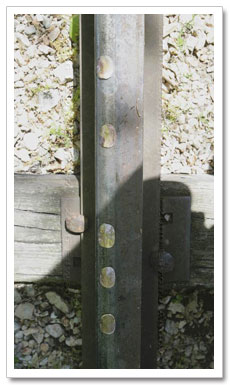 When I was ten I lived on the edge of a town in a house surrounded by paddocks filled with finches and pheasants and bright yellow buttercups. A train line connecting us to a larger world ran fifty metres from our small home and on Sundays I would lie in concealment in the long grass with the pennies intended for the church collection box placed carefully on the steel tracks, watching in fascination as the 10am train rushed by, crushing them into bronze wafers.
One day my father discovered my growing collection and noticing a still vague resemblance to a British monarch on one of my pulverized coins, surmised the truth. Wielding the dreaded riding crop, the usual rod of retribution for 'serious' offences, he pursued me to the bathroom where I took refuge and locked the door. "Unlock that door young man! If you're not out on the count of ten I'm going to break it down." Then the slow, suspenseful counting would begin... "One, two, three, ... nine, ten!" "Start again, start again!" I would shout from behind the door. "One, two, three..." and I would open the door and face my punishment "like a man" as he would quaintly put it.
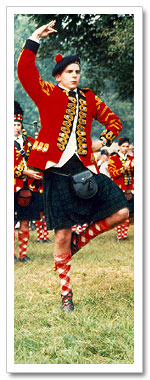 At age eleven, my crushed coin collection still intact, I was excused any further dealings with our local church - a milestone day in my life - but instead subjected to Scottish dancing lessons, also ominously on a Sunday. There I met Alwyn, my thirteen year old red headed Scots dancing partner – in a moment of ingratiating foolishness I presented her with one of my treasured train modified coins, claiming it was a priceless ancestral relic handed down through generations of our clan from the 1746 Battle of Culloden.
Standing four feet two inches tall in my dancing pumps and tartan socks, clad in a red and green kilt with deerskin sporran and clutching my counterfeit 'Battle of Culloden' coin collection, I must have been an irresistible sight to the impressionable Alwyn – she was smitten! Whether it was a glimpse of my unscotsmanlike knobbly knees or growing suspicions about the authenticity of my coins, Alwyn's interest in me began to wane and then evaporated entirely when we came last in the Highland Fling end-of-year competitions. I had stumbled on and scattered the crossed swords over which we leapt and pranced and a distraught Alwyn had stormed off and abandoned me for the sanctuary of the changing rooms. It was here in the middle of the Aramaho Community Centre, attired in my ridiculous kilt, that I first knew anger. Spurned by the fickle Alwyn, alone on the wooden dance floor, I could have swept one of the ceremonial swords from the floor and pursued her to a terrible revenge, a demented eleven year old, then run rampant through the horrified audience carving my way through a wall of kilts and human flesh before fleeing into the night.
All my willingness to attend any further dancing lessons was gone and once again I had to lock myself in the bathroom while my parents pleaded and cajoled from the other side of the door, finally relenting and agreeing to an end to all my Scottish highland dancing. Rebuffed by the Scots, my dancing days now behind me, I was free to explore new pathways in life – my childhood coins, so artfully crafted under the wheels of the mighty train, eventually disappeared out of my world the way all things do, living a life of their own.
– Jogyata.
Agatha and Me
Call me a greenie or a bleeding heart if you want to but when I came upon a 1000 year old kauri tree on my Sunday jaunt through the nearby Waitakere Ranges, I found it irresistibly huggable.
Agatha and Me...
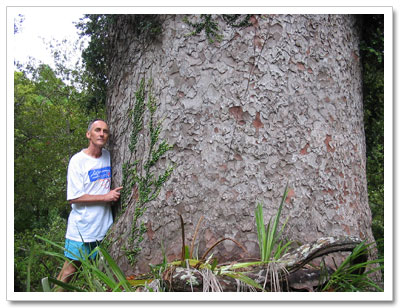 In comparative human time it's barely past adolescence and could be here for another 1000 years barring lightning strike, landslide, continental drift, nuclear war or boredom (2000 years is a long time rooted in one place). The Kauri tree is known by the rather graceless and unfortunate botanical term agathis australis, so my new friend is known locally as Agatha, not a favourite name of mine but we don't want to cause an arboreal identity crisis by giving Agatha a new name just now. Trees have consciousness too and these wonderful revelations of God move us in ways beyond our minds comprehension – we all come from the Universal Consciousness and are connected in the great stream of life. My new friend is also a distant relative and conjoined with me in spirit and sitting quietly on the forest floor, my back against the rough bark and the dawn sun colouring the hillsides and valleys with a changing golden light, I can sink back – mmmmm – into a nourishing and soothing silence.
Agatha's first 900 years were spent peacefully growing up in one of the greatest botanical cathedrals of planet earth – 200 foot high forest giants of breathtaking splendour and girth, filled with gorgeous birds and daylong birdsong. My colonial predecessors smashed the majestic virgin kauri forests that mantled these western mountains the way a thoughtless child smashes a toy – part of the insane ecological holocaust ongoing even today – and Agatha lived through all that, a lonely survivor among the tragic wreckage of an ancient dynasty of trees.
The mystic and animistic traditions of our ancestors seem remote from us now, insulated as we are by roads and concrete walls and carefully devised urban landscapes that protect us from our worst fears, and now we only 'visit' nature, tourists of our last womb-wildernesses, armed with our maps and cellphones to ward off the unthinkable. But the ancient impulses are still there, and seated beneath Agatha's towering arms I can feel these faculties becoming sharpened inside me along with a sense of release from the burden of myself and my anxious life.
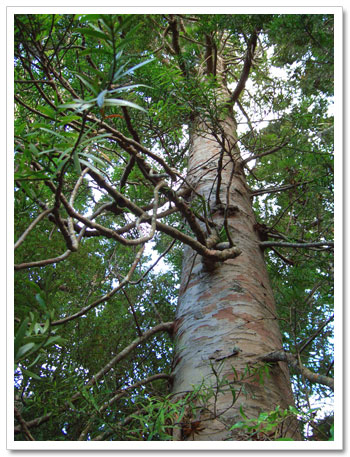 I like these hours wandering in a garden of ridges and deep valleys and effortless beauty, hearing the water in the streambed far below and the language of the forest all around. In the sunlight the air is filled with teeming embryonic life, millions of tiny spores drizzling from the green fronds of the mamaku and the waist high thickets of ferns – I breathe them in joyfully.
We need whatever it is these sanctuaries provide. Untamed nature can be a harsh learning place but also a great schoolroom of self-knowledge – and here where the wilderness of nature and the wild places of the mind intersect, we are often undone. I remember once camped on an alpine ridge just below the snowline in Westland National Park, miles from the civilised world. Shortly after midnight a storm blew up and high winds toppled huge black beech trees to – all around me the crash of giant trees tearing down through the canopy to the ground. Eyes wide with fear, and nowhere to go or hide in the inky blackness, I lay there praying with a trembling fervour to God. At dawn a scene of utter devastation all around me – but miraculously I had been granted life.
Such moments that our modern world so carefully shields us from are treasures that never leave our memory, moulding us without gentleness or pity. Our 'self' is pared away and we are opened up to the capriciousness of life and death, only a moment of chance apart, and to the primal fears and trapdoors that open in the wild places of our minds.
Nature is a repository of many potential experiences that ground us and make us better, more complete – and here, as in meditation, all our sensibilities converge toward new insight and discernment. Cut off from all this, we become less human, less civilised.
A part of us grieves for our vanishing wild places and much of my own love of wilderness has an underlying melancholy. Our token parks and reserves, the pocket handkerchief remnants fenced off from encroaching farms into lonely islands, proclaimed to assuage our guilt, do not lessen our sadness at what we have done. Nor do these sustain the life they once bore – disconnected from the far-off mountains, diminutive in size, often trampled and plundered, they are silent museum pieces waiting for their own demise.
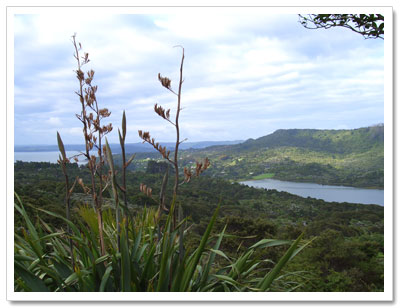 At least Agatha is safe while I live and breathe – she is a symbol of something precious for me that I am happy to bleed and sacrifice for. She is the song of eternity, the beauty of God, the glory of nature, the sanctity of the sacred, a glimpse through a lovely, disappearing window into an irretrievable past, an inviolable last remnant that must be gifted to the future. And in some barely understood way she is myself – I find my own spirit when seated at her feet.
– Jogyata.
Footnote
In a Jewish tale a young boy is asked by his teacher why he ran away from the community and into the forest time after time despite being frequently found out and punished. His rabbi asked him: "Why do you waste your time in the forest? Why do you go there?" " am looking for God", said the boy. "Isn't God everywhere?" asked the rabbi, "And isn't He everywhere the same?" "Yes," said the boy, "but I am not." (From Moment and Memory)
Related Links
- Trip to Cascades Kauri Park – The Sri Chinmoy Centre Gallery.
- About New Zealand – natural history and settlement.
- Royal Forest and Bird Protection Society of New Zealand
- ‹ previous
- 116 of 125
- next ›

Except where explicitly stated otherwise, the contents of this site are licensed under a Creative Commons Attribution-NonCommercial-NoDerivs 3.0 Unported License. read more »
SriChinmoyCentre.org is a Vasudeva Server project.