
Running and Me
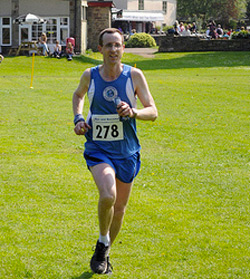 "Why do I run? I run to get inspiration. I run to increase my dynamism. I run to enjoy the beauty of nature and feel my connection with that beauty, which to me is something very sacred. Most of all, I run because running has changed me as a person and is changing me still. Through running, I'm becoming.
Is running a form of meditation? Well, sometimes yes. I have certainly had meditative experiences while running, especially during races where the intensity of the event triggers in turn an intense concentration - which is of course one of the gateways into the experience of meditation.
As with meditation, I feel the proof of the spiritual value of running is not necessarily in how you feel at the time. While running I may feel tired, drained, generally having a tough time (though thankfully these occasions are the exception rather than the rule!) but running has definitely taught me valuable spiritual lessons, and helped me to bring my good qualities more to the fore. After a run or a race, even if the experience was challenging or difficult, I invariably have a lighter mood, a happier demeanour, a feeling that life is simpler than we think and full of positive opportunities.
When I trained for my first marathon, it seemed like an impossible task. When I completed that first marathon, it brought home to me how anything is possible - how tough challenges will surrender in the face of determination and perseverance. Running has given me that confidence and optimism, and also more belief in myself and in the divine grace that is there to help all of us when we attempt the improbable (I should give up using that word "impossible"). When I ran my first ultramarathon, I realised that there is no limit to our achievements - we can keep going one step further.
Running has its pitfalls, most notably the injuries that one can sustain (though with hindsight all mine were avoidable, had I known then what I know now!). Coming to terms with being unable to run, and the process by which the injuries were surmounted so I could run again, was in itself an inspirational journey. In those times when I could not run, I was aware of how my consciousness suffered - something was most certainly missing. Thats not to say that one cannot follow the spiritual life without running, but for me it has become an essential ingredient, and were I ever deprived of it for good I would need to find another source of purity, simplicity and dynamism to complement my practise of meditation.
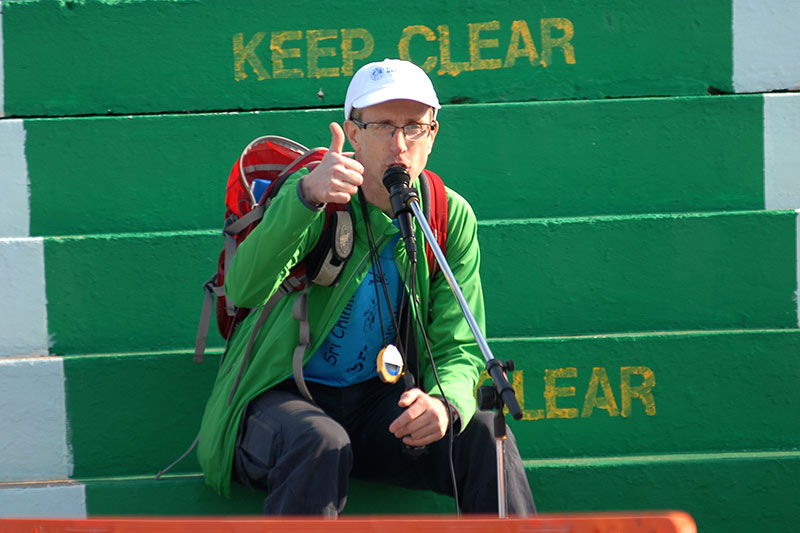
I worked for many years in a running shop, meeting hundreds of runners every month. Not all are conscious that running has a spiritual side, and some would dismiss such a notion as fanciful. Most runners, though, do find the activity inspiring and a source of immense satisfaction. I'm convinced many or even most runners are growing spiritually through their running, developing self discipline, determination, perseverance, detachment and numerous other spiritual qualities; not to mention the most significant spiritual quality: happiness, pure and simple. Anyone who takes on the marathon, for example, must learn how to contact their inner reserves - not just their physical reserves of energy but also their will power and the strength and inspiration that abide in one's heart and soul. If you doubt this, go to your nearest marathon and look at the faces of the finishers. You may be surprised at what you see; in their eyes, in their smiles, in the way they are finding fulfilment through as simple an activity as running.
In the spiritual life, one's spiritual practise must take first priority in one's life. Each morning when the day begins, I rise early to meditate. After meditation I sing spiritual songs, and give myself time to assimilate my meditation. Then, I get on my running shoes and head out to greet the day. Whatever the weather, its invariably a beautiful morning."
Garga Chamberlain
Sri Chinmoy Marathon Team Race Director, Bristol

My love of spiritual poetry
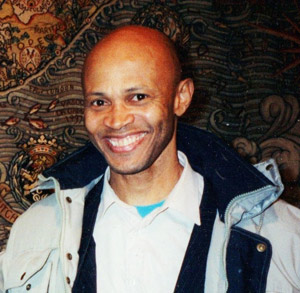 The inspiration for my poetry began as a young child growing up in the Caribbean. On cool dark, wintry nights, in the village of Hermitage, St Patrick's on the island of Grenada, the boys and I would sit on the side of the road telling Annancy [traditional folklore] stories until the early hours of the morning. Our only, yet precious comfort, was the taste of piped water coming directly from the 'boiling' springs. Of course, the stories themselves gave tremendous joy and inspiration, together with a deep sense of love and brotherly comradeship. I have not heard stories such as ours since, neither have I encountered the purity and self-giving nature of this life-energising water on those cool dark nights.
It was not until the early 70s that I continued my work. The divine poet, to me, is inspired unconsciously, as well as consciously. As to whether the inner accolade that comes from poetry is greater when the poet is conscious of the higher force or not conscious, I leave for others to decide. What is do know is that some of my earlier works, while written for the mundane, contained many lofty and sublime pieces. This I was only able to recognise with my spiritual awakening and the depth of inner awareness given to me on Sri Chinmoy's path. So even prior to my conscious awakening, I was unconsciously reaching for higher ideals.
My first poems that I wrote on Sri Chinmoy's path were 'prayers' written in the 80s, composed to assist me in my life of spiritual pursuit. Sri Chinmoy's style of devotion, yearning and aspiration for the Supreme had influenced me deeply, giving me the strength and necessary tools to re-commence my work.
What is a poet? I was once sitting at home when I received a letter, which had a most profound effect upon me. there and then I started composing a poem:
"Thank you"
Said the devotee to his gurubhai.
The words echoing from his inner core,
While joyful secretions trickled down his cheeks.
Happy was he in the waves of gratitude
Suddenly taking hold of his heart.
O lord, immeasurable is Your beauty,
How diverse Thy ways of expressing it!
This moment: stillness, repose, and the next...
Flowing gladness, wondrous delight,
An awakening of psychic tears and thankfulness.
Brother gurubhai, appreciation for thy faith in Man.
Long lives thy soulful inspiration.
Again at a gathering in Shepherds' Bush [in London], I experienced a 'flashing' of the wholeness of life and its interconnectedness, which prompted me to write the following poem:
Interconnectedness
I smiled at the server,
Who lovingly handed me the drink.
The swami had just finished
A most stirring speech.
Musicians played hauntingly,
While the vocalist sang melodiously
To rapturous applause,
And the drumming of the tabla mesmerised the crowds.
Upstairs, where I now sit,
The aroma of palatable food and cheerful noises,
Permeate the soulful atmosphere.
Servers diligently seek to see
That all is fed and trays are taken away.
Tables are wiped clean,
While floors are swept.
All is buzzing with life.
Downstairs, the pungent smell
Of incense, still lingers on,
And the deities stand majestically
At their respective places.
The shoes racks swell with pride,
And the book tables quietly wait their turn
In this game of life.
Silently I sit, not moving, but
Marvelling at the intricate web and
Beauty of Truth's Creation.
Each part of the whole,
Playing his or her tune, and dancing with God.
Some of my most inspired works came as a direct result of experience in mediation. I have enclosed one below:
In the Presence of Thy Sanctity
As I sit down before Thy sacred shrine,
Your stillness-peace within I feel.
Grace points me to an inner thrill,
I know the effort is not mine.
Around me all is calm, serene,
Your spirit percolates my being.
Before I even think of Thee,
Thy bliss is flowing ever free.
Your love is sanctimonious, keen,
So selfless for a wretch like me,
When all I have done is enter in,
The presence of Thy sanctuary.
The point here is to show that the divine poet, whether he is conscious or not conscious of the Supreme, writes primarily from a Higher inspiration flowing through his soul, heart, mind, vital and finally fingers and pen in order to be dynamically used to an esoteric or psychic flow. Thus Sri Chinmoy, with his direct inner vision, does infinitely better than I can, and so I would finish this writing with a poem of his which illustrates fully - in my view - the soul of the inspired poet as well as the poet with direct perception of life's inner transcendental beauty.
O Light of the Supreme
by Sri Chinmoy
O Beauty non-pareil, O Beloved,
Do burn the fire of beauty and splendour
Within my heart.
By loving You, eternally beautiful I shall be.
May Lord Shiva's destruction-dance
Destroy all shackles of the finite.
May the light of the Supreme inundate me,
My heart, my heart, my all.
Having loved the Infinite,
The heart of gloom is crying
For the bloom of Light
O life infinite, give me the eternal hunger
Aspiration-cry.
The tiniest drop will lose it's raison d'etre
In the heart of the boundless ocean.
In fire and air Your life of the Spirit I behold.
Mein Weg mit Sri Chinmoy
Ich heiße Tapaswini Voelckner, bin am 02.04.1947 geboren und seit 07. Mai 1980 Schülerin von Sri Chinmoy.
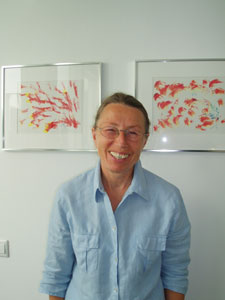 Warum ich Schülerin Sri Chinmoys geworden bin, möchte ich hier kurz erzählen. Als unsere erste Tochter 1972 in den Kindergarten kam, stellten wir fest, dass sie sich nicht richtig in die Gruppe integrieren konnte oder wollte und sie dadurch der Kindergärtnerin auffiel. Nun war guter Rat teuer - soll man eine Therapie machen oder was tun ?? Mein Mann studierte zu dieser Zeit an der FH und hatte im Fach „Psychologie“ eine sehr nette Dame, die er nach Rat fragte. Da stellte sich heraus, dass diese Dame unter anderem auch Hatha Yoga unterrichtete und spontan gingen wir zu ihr. Über diese Dame und das Hatha Yoga wuchs unser Interesse für die Zusammenhänge von Geist, Körper und Seele. Wir begannen alle möglichen Kurse zu besuchen und das „sich mit diesen geistigen Dingen auseinander setzen“ wurde unser tägliches Geprächsthema. Wir wurden Vegetarier und begannen zu meditieren.
Auf unserem Weg des „Suchens“ stießen wir in kurzer Zeit 4 Mal hintereinander auf Informationen zu Sri Chinmoy, einem spirituellen Lehrer, der in New York lebte. Was mich sofort an diesem Mann faszinierte, war seine unglaubliche Aktivität. Das war kein Mann, der in einer Höhle saß und nur meditierte oder der abgerückt vom sogenannten normalen Leben seine Verwirklichung lebte. In zu vielen Gruppen erfuhr ich viele schöne Worte, ein vordergründiges Lächeln, aber oft hatte ich das Gefühl, dass das alles sehr unehrlich und unecht wahr. Bei den Schülern Sri Chinmoys traf man viele aktive, sportlich engagierte Leute, die zwar auch gerne mal „Weisheiten“ losließen, aber ansonsten sehr natürlich und ehrlich waren. Alle waren Sucher auf ihrem Weg zur „Selbstverwirklichung“ (einem großen Wort), aber gaben nicht vor, bereits erleuchtet zu sein, wenn sie eigentlich noch Probleme mit ihrem täglichen Leben hatten.
Ja und das entsprach ganz meinem Naturell - ich bin sehr aktiv, liebe das Leben in Form von Arbeit und Sport, und ich liebe die Einfachheit - auch ein wichtiges Attribut auf Sri Chinmoys Weg. Was mir auf dem spirituellen Weg zugute kommt, ist meine angeborene Disziplin, die mir so vieles erleichtert: frühes Aufstehen, regelmäßiges Meditieren, regelmäßig Sport machen, beim Lernen aus Fehlern, beim gesunden Ernähren, beim Umgang mit meinen Mitmenschen usw.
Ich bin zutiefst dankbar, dass mich Sri Chinmoy damals als Schülerin angenommen hat und hoffe, dass ich ihm nicht zuviele Sorgen mit meinen Unzulänglichkeiten mache. Ich bemühe mich täglich, Fortschritt zu machen - nach dem Motto: es ist nie zu spät und man ist nie zu alt, um zu lernen. Allen, die das lesen, wünsche ich viel Freude auf ihrem Weg zu Selbstfindung.
Willkommen auf der Homepage von Smarana
Mein Name ist Smarana und ich komme aus Wien. Für mich ist es immer sehr amüsant, wenn mich jemand in Asien fragt, woher ich komme. Ich sage ihm, dass ich aus Austria (Österreich) komme und sie sagen dann: „Oh Australia.“
Ja, Österreich ist ein kleines Land, aber sobald man von Mozart und klassischer 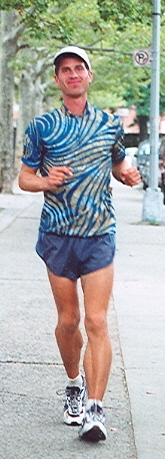 Musik spricht, dann wissen die Leute Bescheid. Ich bin meinem Vater sehr dankbar, da er es war, der mein Interesse für Spiritualität geweckt hat. Wir haben oft stundenlang über Psychologie und Spiritualität gesprochen. So habe ich auch im relativ zarten Alter von 16 Jahren, Sri Chinmoy kennengelernt. Heute vergieße ich Tränen von Freude und Dankbarkeit, bei dem Gedanken, was ich in den Jahren als Schüler von Sri Chinmoy an äußeren und inneren Erfahrungen machen durfte.
Das Leben wurde für mich zu einem Abenteuer und täglich erforsche ich neues spirituelles Land. Das Leben ist für mich reich und farbenfroh geworden und es fühlt sich so an, als ob ich in einem Segelboot sitzen würde, dessen Segel voll vom Wind gebläht sind und ich auf direkten Kurs zu meinem Ziel bin. Mit Sri Chinmoy als meinem Lehrer, fühle ich mich wie ein kleines Kind, dass an der schützenden und begleitenden Hand des Vaters geht. Diese Hand war in all den Jahren immer spürbar und ich habe mich immer auf sie verlassen können.
Mein spirituelles Leben ist sehr eng mit Sport verbunden, speziell mit dem Laufen. Das Motto von Sri Chinmoy ist „Self-Transcendence“, was etwas holprig übersetzt etwa bedeutet „Über sich selbst Hinausgehen“. Das Sri Chinmoy Marathon Team organisiert den längsten Straßenlauf der Welt auf einem Rundkurs: das Self-Transcendence 3100 Mile Race. Ich war in der glücklichen Lage diese „Pilgerreise“, wie ich es nenne, schon ein paar Mal zu beenden.
In dem Buch The Body: Humanity`s Fortress beschreibt Sri Chinmoy den Körper als einen Tempel und die Seele als den Altar. Es ist sehr schwierig zu meditieren, wenn der Tempel baufällig ist, und andererseits ist es nicht sehr inspirierend zu meditieren, wenn der Altar schäbig ist. An der Aussage „mens sana in corpore sano“ (ein gesunder Geist in einem gesunden Körper) ist etwas Wahres daran. Ein gesunder Körper ist enorm hilfreich für gute Meditationen und Meditation führt zu einem gesunden Geist, Wer sich schwach und krank fühlt, kann nicht wirklich gut meditieren. Aber umgekehrt bringt ein gesunder Geist auch einen gesünderen Körper mit sich.
Sinnsuche

Mit meinen Eltern und meinen zwei Brüdern wuchs ich in einer Kleinstadt bei München auf. Ich hatte eine glückliche Kindheit verbracht. Meine Eltern, die beide leidenschaftliche Bergsteiger sind, haben sehr früh meine Begeisterung für die Berge geweckt. Dadurch war ich oft in der Natur und habe dort auch viele Erfahrungen mit mir selbst gemacht. So hatte ich mit siebzehn Jahren schon so einiges erlebt: extreme Klettertouren im senkrechten Fels, Eistouren im Hochgebirge und auch ein mehrtägiges Fasten allein in einer Berghöhle. Ich war auf der Suche nach etwas. Ich hatte immer das Gefühl, daß es noch etwas ganz besonderes geben muß. Etwas, das meinem Leben einen tiefen, wirklichen Sinn gibt.
Eines Tages hatte ich dann ein sonderbares Erlebnis: Bei einer Kletterfahrt sah ich einen meiner Freunde wie er ohne Seil in den Abgrund stürzte. Die Zeit schien plötzlich wie stehenzubleiben, und es war ein mir bis dahin völlig unbekannter tiefer Frieden in der Luft. Das Vogelgezwitscher verstummte. Nichts regte sich. Alles war still - bis ich den Aufprall hörte. Schnell begab ich mich hinab zu meinem Freund aber alle Wiederbelebungsversuche blieben ohne Erfolg. Er war tot.
Die nächsten Tage verbrachte ich mit ständigen Gedanken über den Sinn des Lebens. Ich tat mir schwer einen zu finden. Ich war gerade in meiner Ausbildung zum Feinmechaniker und seit einer Woche dabei, einen Hammerkopf zu feilen. Er wird aus einem besonders harten Stahl hergestellt. Anstatt Späne, staubt es nur ein wenig beim Feilen und so dauert es tagelang, bis man auch nur ein paar Millimeter weggefeilt hat. Diese Tätigkeit schien mir aufeinmal völlig sinnlos zu sein. Mir wurde bewußt, wie schnell das Leben zu Ende gehen kann und wie wertvoll das Leben ist. Ich fragte mich selbst, ob ich wirklich mein Leben bewußt lebe. Dinge, die mir gewöhnlich Freude bereitet haben hinterließen in mir plötzlich eine gähnende Leere. Gleichzeitig hatte ich jedoch immer öfter eine Erfahrung von tiefer, innerer Stille. Das hat schon am Unfallort begonnen. Nachdem mir klar wurde, daß ich nichts mehr für meinen Freund tun konnte. Als die Sanitäter den regungslosen Körper auf einer Bahre davontrugen ging ich den Weg ein bißchen hinab um alleine zu sein. Auf einmal fühlte ich, daß es nichts mehr zu erreichen gab. Das ständige Hetzen und Treiben war vorbei. Es gab nichts mehr für mich zu tun. Ich schaute in die Natur, die Sonne dämmerte und in mir machte sich eine tiefe Ruhe breit. In den Wochen darauf beschäftigte ich mich immer mehr mit geistigen Dingen. Eines Tages ging ich an einem Plakat vorbei. Gerade noch aus meinem Blickwinkel konnte ich das Wort ZEN lesen. Ich war schon einige Schritte weitergegangen, als mich das Plakat wie magnetisch zurückzog. Eigentlich habe ich auf Plakate nie besonders geachtet. Dieses aber, mußte ich mir einfach aus der Nähe anschauen. Es wurde ein Vortrag über ZEN-Buddhismus angekündigt und ich wußte sofort: Da muß ich hin!
Eine Woche später war es so weit. Ich besuchte den Vortrag und war vollauf begeistert. Der Referent war unglaublich sympatisch. Mithilfe vieler humorvoller Geschichten erzählte er, wie sich der ZEN-Buddhismus ausbreitete. Heute fällt mir keine einzige dieser Geschichten mehr ein aber dennoch haben die Worte bei mir einen tiefen Eindruck hinterlassen. Ich wußte, daß der Vortragende seit vielen Jahren meditiert und er schien genau das zu haben, was ich suchte: Er war locker, spontan und witzig, hatte eine freudige Ausstrahlung und es war ihm anzusehen, das er mit seinem Leben glücklich war. Mein Interesse an Meditation wuchs schlagartig. Nach dem Vortrag erhielt ich eine Einladung zu einem wöchentlich stattfindenden Meditationskurs. Der Kurs war genauso wie der Vortrag kostenlos, was mir als Lehrling sehr entgegen kam. Ich konnte es gar nicht abwarten bis endlich der erste Kursabend heranrückte. Nach langem Suchen fand ich endlich den Ort, wo der Kurs stattfinden sollte. Dem Kursraum entströmte eine unglaublich angenehme Ruhe und ich fühlte mich unglaublich wohl. Wie nach einer langandauernden Reise, schien ich auf einmal am Ziel angekommen zu sein. Ohne auch nur ein Wort zu sagen, fühlte ich mich völlig verstanden.
Der Kursleiter war kurzfristig verhindert und so kamen seine Frau und seine Tochter. Statt aber wie geplant den Meditationskurs abzuhalten, erzählten sie aus ihrem Leben mit Meister Sri Chinmoy. Für mich wurde es richtig spannend. Hatte doch auch der Referent schon so einige interessante Geschichten von Meistern berichtet. Als der Abend vorbei war und ich mich auf den Nachhauseweg machte, war mir klar, daß ich hier etwas unglaublich wertvolles gefunden hatte. Eine fast ekstatische Freude überkam mich und ich verspürte eine tiefe Dankbarkeit.
In der nächsten Woche kam der Kursleiter und führte uns in die faszinierende Welt der Meditation ein. Der Kern des Kurses bestand aus einigen wirkungsvollen Übungen, die wir auch jeden Tag zuhause ausführen sollten. Zudem erhielten wir an jedem Abend eine ganze Reihe von Lebensweisheiten. Sie waren direkt aus dem praktischen Leben und für mich sofort nachvollziehbar. Der Kurs war immer montags und so wurde der Montag mein „Feiertag“. Nicht daß ich an diesen Tag nicht in die Arbeit ging - nein, jeden Montag versuchte ich alles bewußter zu machen wie sonst. Im Kurs lernte ich verschiedene Konzentrations- und Meditationsübungen, die ich dann regelmäßig auch zuhause ausübte. Schon nach ein paar Wochen spürte ich wie die Meditation mein Leben veränderte. Ich sah auf einmal alles aus einer anderen Perspektive, alles viel positiver. Auch spürte ich, wie sich nach und nach eine tiefe innere Freude in mir ausbreitete. Dazu muß ich sagen, daß ich von Natur aus ein eher zwiederer Zeitgenosse war. Freude also nicht gerade zu meinen herausragendsten Eigenschaften zählte. Umso schöner war für mich diese Erfahrung von Freude. Ganz alleine begann sie aus dem Inneren zu strömmen, wenn ich es nur schaffte meinen Verstand für eine Zeit lang ruhig zu halten.
Zuerst übte ich einmal am Tag etwa fünfzehn Minuten, später dann zweimal am frühen Morgen und am Abend. Nach ein paar Wochen bemerkte ich, wie mir diese Art von geistiger Nahrung zum Bedürfnis wurde. Die Ausgeglichenheit und Freude fehlte mir, wenn ich mal wieder verschlafen hatte und ohne Meditation zur Arbeit eilte. Andersherum konnte mein Tag gar nicht mehr schief laufen wenn ich meine Morgenmeditation „erhalten“ hatte. Mit einem zufriedenen Lächeln fuhr ich dann jedesmal mit der U-Bahn zur Arbeitsstelle. Dankbar, schon den Morgen glücklich beginnen zu dürfen.
Willkommen zu meiner Homepage
Hallo
Ich bin Spezialistin für Arbeitssicherheit und Gesundheitsschutz und praktiziere seit 1990 Meditation. Seit 1995 gebe ich regelmässig gratis Meditations-Workshops im In- und Ausland, sowie praktische Stress-Management-Workshops für Firmen.
Oft werde ich nach meinem aussergewöhnlichem Vornamen gefragt. Subarnamala bedeutet auf Englisch: excellent, brilliant golden garland. Ist nicht ganz so einfach auf deutsch zu übersetzen. Garland (Mala) könnte man Girlande nennen oder Kette (Gebetskette)... also exzellente, brilliante, goldene Girlande.
Das war die Kurzfassung.

Bamboo, Butterflies and Buddha : Japanese Journey
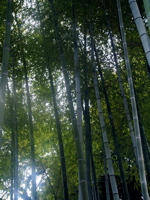 Home from my first visit to Japan, I feel as if my life is a sheet of paper upon which the country has made an imprint, much like a Japanese woodblock print. In my varied travels, no other country has touched me as deeply. How were the details of this woodblock etched? The imprint began with the harmony with nature. Natural beauty and gardens form an important element in Japanese temples and shrines and I deeply enjoyed water lilies, sculpted trees/bushes and ponds with lotus plants as tall as people. Natural beauty sparkled not just in temple gardens and grounds. Indeed every stoop -- whether private residence, small shop or restaurant -- seemed to include beautiful plants, flowers and landscaping. Butterflies, many quite large, popped up everywhere and I witnessed many examples of people maintaining pristine beauty and cleanliness in their midst.
Surely the predominant impression arose, however, as my inner Godward yearnings were fed by the dominant prayerful focus in Japan. A nation slightly smaller in size than the American state of California, its landscape is dotted with over 100,000 Shinto shrines and 77,000 Buddhist temples. Seemingly around every corner, one encounters a place of prayer.
During my weeklong visit to Japan with spiritual teacher Sri Chinmoy and a group of his students from various countries, I visited a mere seven of these countless temples and shrines. Not versed in either of the two major religions in Japan - Buddhism or Shintoism, I nonetheless embraced the depth of feeling each and every location evoked. While some of my Asian travels have exposed me to various temples, the Japanese ones felt the most alive with a dialogue of divinity.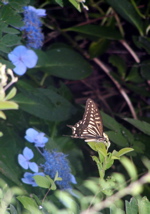
Universally peopled with Japanese worshippers rather than Western tourists, I witnessed the varied strains of Japanese hymn and supplication to God. Coins were thrown into the offering box. Individuals bowed and clapped their hands in front of deities. Wooden prayers cards (emu) were hung and fortune slips (omikuji) tied to poles. A short stop at the purification fountain near the entrance to bathe one's hands and drink was a common scene. Bundles of stick incense were placed into large incense burners. In certain areas of the temple grounds, shoes were removed before proceeding further into the sanctuary area.
While the forms of prayer and homage were largely unfamiliar to my Western background, the underlying essence permeated the air more densely than any incense ever could. Somewhat recently entranced with taking photographs, I had all I could do to stop myself from putting away the camera and just bathing my soul in the spirit of reverence, peace and stillness that pervaded the very air.
My first day of sightseeing with a friend began at a large complex of Shinto buildings and gardens in Kamakura called the Tsurugaokahachimangu Shrine complete with a large lotus pond in the center of the complex. Our next stop was a Buddhist temple only a short distance away. 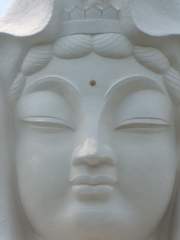 The information sheet we received along with our admission ticket explained that certain temples in Kamakura are for pilgrimage to the Goddess Kannon, known as the Goddess of Mercy. We spent the remainder of that day going to other Kannon temples.
Japan is rather steamy and hot in July so we sat for a bit that afternoon on a bench in the shade of a tree on the grounds of one of the Buddhist temples. We both agreed that even though we had been in Japan for less than twenty-four hours our hearts were already captivated by this beautiful and silent land and we were ready to proclaim that it surpassed any other destination in our varied travels.
It is exceedingly difficult to even put it into words because at that exact moment we were not even looking at an extraordinary statue or landscaped visual feast. Yet while perched on that bench taking refuge from the heat, we seemed to breathe in a subtle but deep feeling of inner quiet and peace that nourished us deeply.
In one of Sri Chinmoy's songs composed in dedication to Japan, his lyrics call it "silence-ecstasy."
Japan, Japan, Japan!
A soulful flower-garden.
Clearly you see,
Quickly you do.
Silence-ecstasy
Your property true.
Japan, Japan, Japan!
High Heaven's hallowed Plan.
Another experience during my visit reinforced this sentiment of stillness. More sightseeing took us on a day trip to Tokyo, about an hour away from Kamakura by train. Japan is noted for being one of the most densely populated countries in the world with 12 million alone in Tokyo. By matter of contrast, New York City has a population of 8 million. As luck would have it, we came back to Kamakura right at rush hour and more people squeezed onto the train than seemed humanly possible. The train was like a subway car with railings to hold onto overhead for those standing - the lion's share of those in the train! At each stop, a few would get off and more people than got off would squeeze into the train.
For roughly 50 minutes, we rode standing up along with Japanese working people commuting home after their workday. A seeming recipe for stress even if one wasn't claustrophobic, the ride actually felt peaceful. It was so quiet that you could have heard a pin drop. I felt that I could really learn something from the Japanese, as I perceived that each person preserved a sense of privacy and respectful boundaries towards others in spite of the close quarters. After this wondrous experience, I knew that I would both brag about how I rode the subway at rush hour in Japan at the same time that I humbly pondered its thought-provoking lessons in graciously sharing the
planet with fellow travellers.
While I resonated with ancient beliefs and cultural mores, I create a limited picture of Japan emphasizing only pastoral beauty and inner silence. Japan was also quite technologically savvy. Apparently there are at least 5 million vending machines in Japan and they sell just about anything imaginable and can be found on almost every corner.
When we rode the subway, if you inserted two tickets into the turnstile with one on top of the other, one already punched to show your ride just finished and one for the connecting train you were about to ride, it somehow knew to keep the receipt ticket inside the machine and just give you back the receipt for your upcoming ride. As we rode the hotel elevator, it "spoke" to us in a cheery sing-song voice every time we got off at the floor. We don't know what it precisely said since it was talking to us in Japanese. We saw very clever bicycle seats and even surfboard holders attached to bicycles. One day while walking from the subway to the hotel for our evening function with Sri Chinmoy I saw a man ride by on a bike with a fairly large dog in a basket on the front of the bike. What a laugh that provoked! Suffice it to say that the culture appeared to be a fascinating blend of old and new, simple and sophisticated. I very much liked the notion that the inner and outer can proceed without sacrificing one for the other.
My visit was exceedingly short and my impressions might appear incomplete or overly obvious to others more versed in Japanese culture than myself. I just know that it charmed me completely and I am truly grateful for the opportunity to partake in all it offered. If I had to recommend destinations for other like-minded nature lovers and spiritual seekers, I would blurt out "Japan!" without a moment's hesitation.
In conclusion, I wish to share the following words by Sri Chinmoy in which he shares his enlightened vision of Japan,
"I have a very special love and affection for Japan. Right from the first time I came to Japan many years ago, when I didn't even have one disciple here, I still felt my oneness with Japan. Japan always gives me joy and a powerful thrill that touches the depths of my heart. When I think of Japan, I immediately see lamps. Japan is composed of small islands, and I see these islands as soulful aspiration-lamps that are climbing up high, higher, highest. The flames from these lamps are going up and reaching the highest, which is all beauty, love and power. There are a few other things about Japan that also give me enormous joy. Simplicity and humility are of supreme importance in life. Japan has them both. I have been all over the world, but I can tell you that no other country has simplicity and a heart of humility in the pure sense that Japan has."
-Sri Chinmoy. Japan: Soul-Beauty's Heart-Garden, Agni Press 1993.
I also must not forget to mention the kind generosity of all of Sri Chinmoy's students in Japan as well. They provided us with extensive and detailed information for discovering Kamakura and offered us mountains of prasad every night. They were the most gracious hosts imaginable! Gratitude a hundred times over!
And since I managed to take photos after all, here is a link to my photographic memories of the trip:
- ‹ previous
- 123 of 125
- next ›

Except where explicitly stated otherwise, the contents of this site are licensed under a Creative Commons Attribution-NonCommercial-NoDerivs 3.0 Unported License. read more »
SriChinmoyCentre.org is a Vasudeva Server project.