
Wat is een Guru?
Sri Chinmoy beschrijft de rol van een guru of spirituele leraar.
Sri Chinmoy:
Guru is een woord uit het Sanskriet dat "hij die verlicht" betekent. Hij die verlichting schenkt, wordt een Guru genoemd. Afgaande op mijn eigen innerlijke realisatie, wil ik zeggen dat er maar één echte Guru is en dat is de Supreme. Geen enkel mens is de echte Guru. Maar hoewel alleen de Supreme de echte Guru is, hechten we hier op aarde waarde aan tijd. Als we iemand vinden die ons op onze reis naar verlichting kan helpen, dan nemen we zijn hulp aan en kunnen we hem onze Guru noemen.
Een spiritueel Meester of Guru is als het oudste kind in de familie en de zoekers zijn zijn jongere broers en zussen. Spirituele Meesters vertellen hun jongere broers en zussen zien waar hun Vader, de Absolute Guru, is en tonen hen de weg daar naartoe.
De echte Guru is niet in de onmetelijke blauwe hemel te vinden. Hij bevindt zich in de diepte van ons hart. Je vraagt je misschien af, "Als Hij in ons hart is, waarom is de hulp van iemand anders dan nodig om Hem te vinden?" Hoewel deze onmetelijke rijkdom zich in ons hart bevindt, kunnen we haar niet zien of voelen, daarom hebben we iemand nodig die ons helpt. Een vriend van ons, die we onze Guru of spirituele leraar noemen, schiet ons te hulp en leert ons hoe we onze eigen rijkdom kunnen vinden.
Het is niet verplicht om een levende Guru te hebben, maar het is zeker raadzaam. Je weet dat er een doel is en je wilt dat doel bereiken. Als je verstandig bent, neem je de hulp aan van iemand die je het makkelijkste, veiligste en meest doeltreffende pad naar het doel kan wijzen. Als je er honderden en duizenden jaren over wilt doen om God te realiseren, is het niet noodzakelijk om een spiritueel Meester te hebben. Maar als je het doel zo snel mogelijk wilt bereiken, dan is het zeker noodzakelijk.
Als je een Meester hebt, vergemakkelijkt het je innerlijke spirituele vooruitgang. Een spiritueel Meester is je privé-leraar in het spirituele leven. Er is een groot verschil tussen een privé-leraar en een gewone leraar. Een gewone leraar kijkt de examenopgave van een student na en geeft hem dan een cijfer. Hij examineert de student en laat hem dan slagen of zakken. Maar een privé-leraar stimuleert de student thuis persoonlijk en inspireert hem, zodat hij kan slagen voor zijn examen. Op ieder moment van de levensreis probeert onwetendheid je op de proef te stellen, maar je privé-leraar leert je hoe je voor dat examen eenvoudig kunt slagen. Het is de taak van de spirituele leraar om de zoeker te inspireren en zijn aspiratie te vergroten zodat hij het Hoogste zo snel mogelijk kan realiseren.
Om iets in deze wereld te leren heb je in het begin een leraar nodig. Om wiskunde te leren heb je een leraar nodig. Om geschiedenis te leren heb je een leraar nodig. Het is absurd om te denken dat je voor alle andere dingen in het leven een leraar nodig hebt, maar niet voor meditatie. Waarom gaan mensen naar de universiteit als ze thuis kunnen studeren? Omdat ze weten dat ze deskundige instructie kunnen krijgen van mensen die het onderwerp goed kennen. Er zijn een handjevol echt intelligente mensen geweest die niet naar een universiteit zijn gegaan. Ja, er zijn uitzonderingen; iedere regel kent uitzonderingen. God is in iedereen, en als een zoeker het gevoel heeft dat hij geen menselijke hulp nodig heeft, is hij meer dan welkom om zijn capaciteit alleen uit te proberen. Maar als iemand verstandig is en naar zijn doel wil rennen in plaats van te struikelen of alleen maar te wandelen, dan is de hulp van een Guru van onschatbare waarde.
Veronderstel dat ik op dit moment in London ben. Ik weet dat New York bestaat en dat ik daarheen terug moet. Wat heb ik nodig om me daar te krijgen? Een vliegtuig en een piloot. Ondanks het feit dat ik weet dat het vliegtuig me naar New York kan brengen, kan ik daar niet komen zonder de hulp van de piloot. Evenzo weet je dat God bestaat. Je wilt God bereiken via meditatie, maar iemand moet je er naartoe brengen. Net zoals de piloot mij naar New York brengt, moet iemand jou naar het bewustzijn van God brengen dat diep binnenin je is. Iemand moet je laten zien hoe je via meditatie je eigen goddelijkheid kunt binnengaan.
Een spiritueel Meester komt naar je toe met een boot. Hij zegt, "Kom. Als je naar de Gouden Oever wilt, zal ik je brengen. Bovendien kun je, als je eenmaal in mijn boot zit, zingen, dansen en zelfs slapen; maar ik zal je veilig naar de Oever brengen." Als je zegt dat je geen hulp nodig hebt, als je helemaal alleen de zee van onwetendheid wilt overzwemmen, dan is dat aan jou. Maar hoeveel jaar of hoeveel incarnaties zal het je kosten? Bovendien raak je misschien wel totaal uitgeput nadat je een poosje gezwommen hebt en verdrink je.
Zonder Guru ga je heel langzaam en onzeker vooruit. Het kan dat je hoge, verheven ervaringen krijgt en er niet voldoende belang aan hecht. Of twijfels dringen je geest binnen en je denkt misschien, "Ik ben maar een gewoon mens, hoe kan ik nou dergelijke ervaringen hebben? Misschien spiegel ik mezelf maar wat voor." Of je vertelt je vrienden over je ervaringen en die zeggen dan, "Dat zijn enkel mentale hallucinaties!" Maar als er iemand is die de innerlijke werkelijkheid kent, dan kan hij je ervan overtuigen dat de ervaringen die je doormaakt absoluut kloppen. De Meester bemoedigt en inspireert de zoeker. En als de zoeker iets verkeerds doet in zijn meditatie, dan kan de Meester hem corrigeren.
Zodra je een studie hebt afgemaakt, heb je geen leraar meer nodig. Als je wilt leren zingen, ga je naar een zanger en leer je van hem. Als je een danser wilt worden, ga je naar een danser. Zodra je een goede zanger of danser geworden bent, heb je de leraar niet meer nodig. In het spirituele leven is het net zo. In het begin heb je hulp nodig, maar zodra je buitengewoon vergevorderd bent, heb je niemands hulp meer nodig.
Als iemand een ware leerling wordt van zijn Meester, voelt hij niet dat hij en zijn Guru twee totaal verschillende wezens zijn. Hij voelt niet dat zijn Guru in het topje van de boom zit en dat hij aan de voet van de boom zit. Nee! Hij voelt dat de Guru zijn eigen hoogste deel is. Hij voelt dat hij en de Guru één zijn, dat de Guru zijn eigen hoogste en meest ontwikkelde deel is. Daarom vindt een ware leerling het helemaal niet moeilijk om zijn laagste deel aan zijn hoogste deel over te geven. Het is niet beneden zijn waardigheid om een toegewijde leerling te zijn, omdat hij weet dat zowel het hoogste als het laagste aan hem toebehoren.
Hij die je inspireert is je ware leraar.
System Message: WARNING/2 (<string>, line 60)
Block quote ends without a blank line; unexpected unindent.Uit: Meditatie: menselijke vervolmaking in goddelijke vervulling door Sri Chinmoy
Biografie van Sri Chinmoy - deel 3
Dienstbaarheid voor een harmonieuze wereld
Dienstbaarheid
Sri Chinmoy’s contributies op gebied van muziek, literatuur, kunst, dichtkunst en sport zijn verreikend – gezamenlijk vormen ze een oeuvre van formaat en een bron van inspiratie voor veel mensen die op zoek zijn naar een diepere betekenis en zingeving in het leven. Sri Chinmoy’s verzameling van gepubliceerde werken, het grote volume en variatie van zijn prestaties en het wereldwijde bereik van zijn activiteiten hebben de fundamenten gelegd van een spirituele en filosofische wereldvisie die zich waarschijnlijk nog voor zeer lange tijd zal handhaven. Onder deze goedgedocumenteerde prestaties vallen:

De publicatie van meer dan 1600 boeken met gedichten, toneelstukken, universiteitslezingen, essays en verhandelingen over spiritualiteit. Drie van Sri Chinmoy’s boeken – het populaire handboek ‘Meditatie’, ‘De vleugels van vreugde’ en de meer recente dichtbundel ‘Heart Garden’ – zijn internationale bestsellers geworden. Zijn boeken zijn in meer dan 14 talen vertaald. U kunt zijn boeken en gedichten ook online lezen. Surf naar Sri Chinmoy Library of Sri Chinmoy Poetry.

Het schilderen van duizenden acrylverf schilderijen, die in galerieën wereldwijd zijn tentoongesteld. Sri Chinmoy noemt zijn kunst Jharna Kala, dat Bengaals is voor “fontein kunst”, een verwijzing naar de spontane en stromende stijl ervan. Zijn vaak abstracte kunst varieert van miniatuurwerkjes tot enorme muurschilderingen. Een aantal van zijn schilderijen maken deel uit van de permanente collectie in galerieën en instellingen wereldwijd. Wijlen Raisa Gorbachov, echtgenote van de voormalige president Michaël Gorbachov, beschreef Sri Chinmoy’s schilderijen als “een ontmoeting met de verhevenheid van de menselijke ziel.”

Het tekenen van miljoenen vogeltekeningen, oftewel ‘soul-birds’ – snel uitgevoerde pen- en inkttekeningen van vogels die de innerlijke eigenschappen van de menselijke ziel representeren. Volgens veel commentatoren en kunstcritici is deze prestatie één van de meest treffende en in het oog springende creaties uit de moderne kunst. Delen van Sri Chinmoy’s verzameling van ‘soul-birds’ zijn op significante plekken tentoongesteld, zoals op JFK International Airport, in het hoofdkwartier van de Verenigde Naties, bij UNESCO in Parijs, in de Mall Galleries in Londen en in het Louvre in Parijs. Bezoek Sri Chinmoy Art voor meer informatie over Sri Chinmoy’s kunst.

Het geven van meer dan 700 concerten van zijn eigen meditatieve composities voor zalen met tot 19.000 mensen, vaak in grote concertzalen wereldwijd en altijd gratis toegankelijk. Sri Chinmoy is een productief componist van devotionele muziek en is op vele instrumenten thuis, met name op het Indiase snaarinstrument de esraj, waar hij als een maestro wordt beschouwd. Doorgaans bespeelt hij tijdens een concert zo’n 20 verschillende instrumenten, waarbij hij zich heeft specialiseert in cello, dwarsfluit, Indiaas harmonium, piano en viool. Sri Chinmoy heeft een aantal concerten opgedragen aan prominente politieke persoonlijkheden – waaronder 13 concerten opgedragen aan de voormalige Sovjet president Michaël Gorbachov – alsmede aan andere prominenten op cultureel en religieus vlak zoals Paus Johannes Paulus II, Moeder Teresa en Leonard Bernstein. Sri Chinmoy heeft tot inspiratie gediend voor veel musici op klassiek, rock, folk en new age gebied. Bezoek Sri Chinmoy Concerts voor meer informatie.

Het componeren van vele duizenden liederen, waarvan het gros in zijn moederstaal Bengali, waarvan een deel is uitgebracht op CD. Sri Chinmoy componeert vaak tientallen liederen in één sessie, waarbij hij snel en spontaan zijn eigen woorden onder de melodie zet. Bezoek Sri Chinmoy Songs en Radio Sri Chinmoy voor meer over Sri Chinmoy’s muziek.

Het oprichten van het internationale Sri Chinmoy Marathon Team, dat jaarlijks wereldwijd zo’n 600 sportevenementen organiseert, van wegwedstrijden en triatlons tot ’s werelds langste ultramarathons. Sri Chinmoy wordt beschouwd als inspiratiebron achter de herleving van het ultralopen wereldwijd en een aantal van zijn leerlingen heeft wereldrecords in handen. Zijn marathonteam in New York zet de langste hardloopwedstrijden ter wereld op touw: de 6- en 10-daagse en de jaarlijkse 3100 mijl race die gehouden wordt op een rondje van 800 meter lengte rondom een huizenblok in een wijk in Queens, New York. Het Sri Chinmoy Marathon Team staat bekend voor zijn hoge organisatorische standaard en de grote zorg voor de atleten.
Lees meer Biografie van Sri Chinmoy deel 4
Biografie van Sri Chinmoy - deel 2
Sri Chinmoy's doelen en het Sri Chinmoy Centrum
Doelen

Sri Chinmoy mediteert
Sinds zijn vertrek uit India in 1964 heeft Sri Chinmoy ernaar gestreefd een nieuw draagvlak voor wereldwijde harmonie te creëren via een uitgebreide verzameling gepubliceerde werken, via kunstwerken en gedichten, via meer dan 700 wereldwijde concerten van zijn eigen composities, via dialogen met wereldleiders, via sport, atletiek en vele unieke initiatieven waarbij talloze mensen waren betrokken.
Het onderliggende en steeds terugkerende thema in al Sri Chinmoy’s inspanningen en initiatieven is de boodschap dat de mensheid één wereldfamilie vormt en dat wereldharmonie zowel het geboorterecht als de uiteindelijke bestemming van de mensheid is, die ieder mens kan meehelpen dichterbij te brengen.
Hij ziet de spirituele ontwaking in ieder individu – een toegenomen capaciteit voor liefde en mededogen, een gevoel van empathie en eenheid met anderen, innerlijke vrede, een liefde voor zowel God de schepper als God in de schepping zelf – als de grote uitdaging die de mensheid te wachten staat en als essentieel in het bewerkstelligen van een harmonieuze wereld.
“Mijn ultieme doel is dat de hele wereld gezamenlijk kan wandelen in vrede en eenheid. Dit ultieme doel vereist een transformatie van de menselijke natuur. Er moet een grote synthese komen tussen het innerlijke leven en het uiterlijke leven. Het innerlijke leven verlangt naar liefde en het uiterlijk leven verlangt naar macht. Op dit moment zijn we allemaal in de ban van de liefde naar macht. Maar er zal een dag komen dat deze wereld overspoeld zal worden door de macht van liefde. Alleen de macht van liefde kan de wereld veranderen. Mijn ultieme doel is dat in ieder mens de macht van liefde de liefde naar macht vervangt. Op dat moment kan wereldvrede worden bereikt, geopenbaard, aangeboden en gemanifesteerd op aarde.”
Door hun universele aantrekkingskracht en significantie en hun volledige acceptatie van andere culturele en religieuze overtuigingen lenen Sri Chinmoy’s standpunten zich voor een breed publiek. Hij is bekend geworden door zijn inspirationele boodschap van optimisme en hoop, zijn onwankelbare geloof in het onbeperkte potentieel en de ingeboren goedheid van de menselijke ziel en zijn geloof in de eenheid van de gehele mensheid.
Het Sri Chinmoy Centrum

Leden van het Sri Chinmoy Centrum
In de vier decennia dat Sri Chinmoy in het Westen verbleef zijn er in zo’n 400 steden in meer dan 70 landen Sri Chinmoy Centra opgericht. Hun activiteiten delen het gemeenschappelijke doel om te werken aan wereldharmonie via toegankelijke sportieve, culturele en muzikale initiatieven. Het Sri Chinmoy Centrum heeft geen dogma en vereist geen specifiek geloofssysteem van haar leden. In plaats daarvan omhelst het een spirituele benadering van het leven gebaseerd op een geloof in de essentiële goedheid en goddelijkheid van de menselijke ziel.
Sri Chinmoy stimuleert de beoefening van meditatie als een krachtig middel om deze spirituele ontwaking te bevorderen en beschouwt de innerlijke vrede in ieder mens als een noodzakelijke voorwaarde voor duurzame harmonie in de wereld. Om die reden biedt het Sri Chinmoy Centrum als één van haar belangrijkste activiteiten meditatiecursussen aan. Op verzoek van Sri Chinmoy zijn deze cursussen voor iedereen gratis toegankelijk.
Lidmaatschap van het Centrum

Sri Chinmoy sprint
Zoals bij vele spirituele organisaties heeft Sri Chinmoy voor zijn meditatiecentra een aantal richtlijnen en standaarden opgesteld. Hij vraagt aan degenen die zijn weg volgen om vegetarisch te leven en zich te onthouden van alcohol, drugs en roken. Hij moedigt zijn leerlingen aan om regelmatig te mediteren en om elkaar één of twee keer per week te ontmoeten voor een gezamenlijke meditatie. Dit is een hoeksteen van zijn spirituele pad.
Lichaamsbeweging en met name hardlopen worden eveneens gestimuleerd. Sri Chinmoy benadrukt het belang van fysieke gezondheid en een goede conditie als aanvulling op spirituele vooruitgang. Lichaam, geest, hart en ziel – elk van deze aspecten van ons wezen kunnen worden geperfectioneerd.
Sri Chinmoy is persoonlijk geïnteresseerd in de ontwikkeling van zijn leerlingen wereldwijd en heeft veel gereisd om zijn volgelingen te ontmoeten en de groei van de centra te stimuleren. Zoals een liefhebbende ouder probeert het beste in zijn of haar kinderen naar voren te brengen, probeert de spirituele leraar de snelle bloei en ontwikkeling van zijn leerlingen te bevorderen.
Lees verder Biografie van Sri Chinmoy deel 3
Looking Back
Midnight at 38,000 feet – in the economy class cabin everyone is sprawled and sleeping as though suddenly anaesthetized. Far below a full moon mirrors itself and multiplies its light on the sea, a flare of phosphorescence, the Pacific shimmering in a blaze of yellow fire. August Celebrations have come and gone and on the long flight home – chasing the moon, locked in the earth's dark march of night – time to reflect on the coming Anniversary of our Guru's passing.
Almost a year has passed and we have moved from disbelief, shock, grief and tears, across the long trajectory of this first sad year to acceptance, resolve, purposefulness and at last a newly discovered strength. Knowing that we will not simply survive but flourish and prosper, that everything is at it should be. At Aspiration Ground we could ask ourselves a question that would never have occurred before – in what sense, even, is Guru no longer with us?
These past August evenings Guru's own voice has been there on Kamalakanta's faithful recordings, crystal clear and brimming with livingness, teaching us His poem-prayers again – and we would recite them back once more at His prompting. He is there in the Transcendental photographs that we pass as we approach the Temple doors, a walking meditation – my favourite one examines me deeply and I am overwhelmed at how much it embodies everything of Guru's living scrutiny and Being, the omniscience of that gaze that looks into your very depths and summons your own deepest sincerity.
In the Temple itself beneath the greenscape of sycamores and blue summer sky, Guru's cut-out photo-form rests in His chair, so startlingly lifelike that at first you look in disbelief. And Aspiration Ground itself is saturated with the great currents of spirit – piety, devotion, aspiration, the consciousness generated by a thousand seeking souls, the living Presence of the Master. All of Guru's essence is still here – only the impermanent physical aspect that brought these eternal legacies has gone.
For us the idea of Guru's 'departing' has also undergone a genuine shift in understanding, our identification shifting away from the human self we so loved, to everything it embodied and which now will eternally remain, especially our feeling of the inner link and the teachings and training He imparted. This Guru is eternal both through His undying personal connection with us and through His vast legacy of art, literature, poetry, deeds and teachings. Over the past year this understanding has become more real for each disciple – Guru is here with us, accessible and felt through meditation, through the magnetic currents of devotion and faith, through service and manifestation and the secret personal ways we each have. In the light of this understanding it seems almost foolish to say He has gone. And Guru himself writes of His disciples: "I am bound to them... wherever I go after I leave the earth plane, I shall have to be inside my disciples."
It seems extraordinary, but I believe that this is quite literally true and that Guru is now a part of us – that He has poured Himself into each one of us and we can feel this when we are at our most exemplary. Guru is our most illumined part, the highest Self within. "My light will live in and through you people: it will live in the Universal consciousness."
Since last October, there seems to have been two other strong and consecutive reactions. One is a necessity we have all felt to meditate more and to keep the inner foundations of our discipleship very strong. To hold fast to the personal disciplines that Guru taught us and that define our discipleship – prayer and meditation, physical wellbeing and fitness, our songs and our service. To seek the safe-haven of other disciples and the grace that our chosen manifestation tasks always brings. To go to as many Celebrations as we can and not allow our mind to say, "Too poor, too busy, too stressful". For these customs and practices are the individual strands which together tie us to the path, maintain the inner lines of communication between master and disciple, nourish our very souls.
Then to avoid, too, the opposites of all this – too much exposure to the world with the gravitational descent into ordinariness which this always brings, so subtle and imperceptible that we hardly notice we have fallen from aspiration and purpose.
The second has been the impulse to manifest more, to organize ourselves to spread Guru's music, literature, art, His universal teachings and the message of spiritual awakening to every part of our planet. Guru trained us both as yogis and as warriors. " The more you can create or develop inner concern for humanity and for my mission, and the sooner you have love for my realization, the quicker will be your inner progress." And here: "If the channel is perfect, then it is I who pass through that channel".
I liked Shambhu's August 27 Birthday speech to the same effect, that it is we who we are now Guru's arms and legs and voice. Are we not all feeling now what Guru so often told us, that "each individual soul has to accomplish something unique here on earth before it passes behind the curtain of Eternity. Each individual soul has a message, a special gift, to offer to Mother Earth".
A very long time ago when I was a child, in a dream one night I saw myself as a tiny figure standing in the palms of two enormous encircling hands that placed me very gently on the ground. The hands would return for me later, I was made to understand. This memory would be an enduring reminder of some other world from which we have come and to which we will some day return – and I think now of my own small part in Guru's mission as my earth task and of Guru's hands as the cause and manner of my eventual departing. Almost a year has passed since our greatly loved Teacher gave up the physical aspect of His existence, and we are each learning anew how to protect our discipleship, how to more clearly understand our role, how to navigate our way. Those hands that placed us on earth and encouraged our tasks have withdrawn for now but will one day return again.
We who knew Him and who became filled with His purpose have much to do. Sometimes in my life I can't but help marvel at everything and wonder to myself, why has this extraordinary grace come into our lives that we are disciples of this great Master, what boon was granted, what have we done in some forgotten time that earned this redeeming compassion, and how is it that we have been given this devotion, tiny though it is, and this impulse to serve when the world is so full of enchantments? I remember reading somewhere a comment by Shankaracharya that "rare indeed" is a human birth, even more so when accompanied by a longing for liberation and in the protecting care of a perfected sage.
Guru also tells us: "Those who are my direct disciples are so lucky... they will get tremendous joy because they can say, 'we danced with our Master when he was in the physical. We sang with him, we laughed and cried with him, we ran with him.' When I went to the earth-room, you were there with me; and when I go to the other room in Heaven, you will also be there with me...".
– Jogyata.

The Mercedes
This morning I came across these sketches from a 2007 trip to our Christchurch centre and had to smile at things remembered. On this particular joy weekend I was entrusted with a local disciple's father's car – a gleaming new 2007 Mercedes Benz!
 This thing of beauty elevated my popularity to almost celebrity status and all weekend I was lionized, the favoured one. Even a short whirl to the local deli attracted a gaggle of doting fans. Jade kept pestering me for a 'spin' – on the winding uphill roads on a day trip to Akaroa I foolishly agreed and he took the captain's seat, slipping the multiple option gear box into 'sports' mode and giving us all a gleeful look and rather worrying, anticipatory thumbs-up. Then for the next twenty miles or so, a rally style nail-biter, gravity and acceleration pressing us, I pale and mumbling about restraint, back into our seats while Jade put our high-spirited Black Beauty through her paces. Putting on my seat belt, a new experience, and secretly pleased to know that an air bag was waiting to cushion the impact if – 'when' seemed more likely – we ended our journey over an embankment. Wondering how to tell the owner-father, while in the back seat much whooping and merriment.
Driving somewhere and actually being confident of arriving without a breakdown is a new and pleasurable experience for me and I began to wonder about this new challenge to my detachment. It's easy to feel aloof to worldly things when you can't afford them and when you drive a battered old 1980s Mitsi, but when you've been handed the keys to one of the most elegant and powerful automobiles on the planet – a pinnacle of human genius and engineering - your steely asceticism can easily turn to mush. First stirrings of a new desire, a far-off car lust.
At the Hilltop Cafe above Akaroa I sipped a chocolate milkshake, happy to still be among the living, and unmaimed. Reading in the paper a funny true story about a local man being assaulted with a hedgehog, a grenade style overhead lob that implanted a number of painful quills into the victim's derriere. No word on the fate of the poor hedgehog. A couple with much travelled suitcases sat at the counter and asked the owner about rides to the far away airport – they were off to Australia. I said "Why are you going there? This is such a special place". They seemed unhappy, trapped in some compulsion of travel and perpetual motion though unready to admit that it had failed to satisfy.
On the pretext of retrieving something from the car I got the keys back off Jade and commandeered the drive back to Christchurch, squealing the tyres sometimes on the hairpins and switchbacks to avoid appearing prudish or constrained. Subdued murmurs of approval from the back seat. We hadn't bothered driving down to Akaroa township, a must-see tourist destination first colonized by the conquistadorial French, because we were too enchanted with our gleaming black Merc, our new toy. I told everyone about the hedgehog story. Someone told a story about one of our Auckland girls – our national phone company had offered a weekend promotion, call anywhere for as long as you like for only five dollars, and Jyothi had called her family and relatives in India and talked for twenty eight hours! Gasps of admiring incredulity.
Evening was falling, the last of the sun winking in the mirrored windows of farm cottages as though signalling our coming. We were driving without any real destination, unburdened by obligation or time, enjoying the open road and freedom and the sense of peace and reprieve that purposelessness often brings. I was enjoying that numinous feeling often conferred by landscape, open highways, big sky and those in-between spaces in one's life where we are no longer caught by our own story.....that rare and random stillness and quiet joy that comes when awareness is freed of mind and self, consciousness unqualified by thought. Here the memories and images of the day linger, distilled as the fragrance of living itself: the Lilliputian cottages of Akaroa clustered far below against the blue-green bay; the two travellers consumed by their own travelogue, caught in a fable and waiting wearily for a bus; the Mercedes untethered and howling up the mountain roads; advent of evening, those wind brushed skeins of high-up cirrus turning into copper tones and gold; and through the open car window, redolence of sea. Everything poignant, miraculous and charming in the funny way of things.....the gratuitous beauty of life.
– Jogyata.
Pondering on Writing
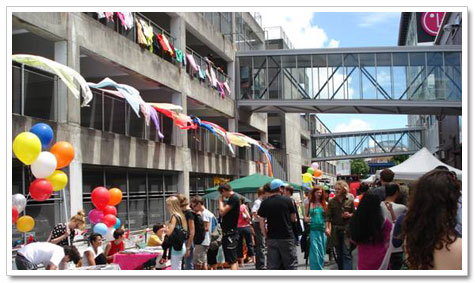 Today in Karangahape Road where I live they were having a colourful street carnival. In the throng of young people many had arm and ankle tattoos and dyed hair – red, blue, purple, yellow – and wore strange, brightly coloured clothing, body jewellery, a philosophical and fashion cult.
I was like an alien in my glaringly unadventurous clothing and drab grey shaven locks. Tonight, a free Saturday evening, I had sat down to write a few lines, perhaps capture a little of the quirky charm of it all, but only one sentence into my task I asked myself, why bother? And instead, wondering about writing itself.
On reflection I think that a good part of my own earliest impulse to write came from a melancholy at a vanishing world, that the things and people that sparkled most brightly were disappearing into oblivion. Writing preserves their warm life, plucks them from the abyss-like a child putting the miracle of a butterfly into a glass bottle, then revisiting this memento half a lifetime later to remember and ponder the topography of his life. The writing and the butterfly are ciphers and landmarks on the journey and intended only for himself.
Where feeling is strong, the writing can be alive and capture a piece of living with such fidelity, as of a mallard or a woodgrouse pressed whole between the pages of a book. The author immortalises a world much larger than his own small life, and though at its centre, celebrates only the vanishing and changing pageantry all around him. He takes in only what he sees – he or she is only a presence, a shadow, a compère revealing the world before it slips away from him with its rich bounty and all of its marvellous oddities.
But there are aspects of writing, too, other than celebration or the attempt to hoard and remember or leave self-testimony – touches of egotism and self-proclamation, confession or contrition, the wish for order, clarity and understanding or writing with one eye on immortality. Or that impulse behind the stick figures of bison and horsemen and antelope left by the ancient cave dwellers. ‘I was here, I lived and died, this is what I saw.’
Writing too is an act of sharing with those we love, and an act of love offered to those we have never met. It can be an exaltation or an exultation; a great cry of the heart; a primal impulse to make contact. It has something in it too, of the motive behind the ‘sounds and images of earth’ capsules fired out into deep space, a potpourri of our planet’s livingness, it’s astonishing and glorious and awful history, drifting out there in the cold black reaches of the universe to communicate, tell others that we are here. ‘Can you hear us?’
The writer, too, sends these signals out, seeking an empathetic heart with whom to commune and complement his or her emptiness and yearnings. An existential loneliness, crying out into the great interstellar void for solace and company and understanding.
In our more heartfelt writing we perhaps do the same, our words the ochreous cave sketches of our ancestors, reaching out past our life and death to some union or communion that is not easily understood. The artist’s legacy survives long after his brief life – what he conveys, the glimpses of what he felt and was, communicate and touch other’s sensibilities in a continuum. Thus the 10,000-year-old imprint of the human hand on an ancient cliff face fascinates us. We place our hand over theirs, over the pigmented fingers and palm of one who roamed here in distant millennia; dream of long ago, feel the whisper of eternity and the chill breath of our own mortality, the stirring of ineluctable questions so often concealed for their starkness.
But writing too is an expression of our jubilation and delight, as simple as the sap rising up into the tree and producing all of its lovely fruits and flowers. Each poem, song, an outpouring and flowering of spirit, simple and pure, requiring no need of analysis or understanding, no audience or listener or appreciation and as inevitable and easy as an incoming tide.
"Art is the outer vesture of love," writes Sri Chinmoy. "Art, like love, is a force of oneness with the infinite. When we create a piece of art, we are really re-creating or reflecting some beauty of the Infinite."
Hello, is anybody out there?
– Jogyata.
People Have More Skills Than They Realise
Did you know that Jogyata used to ride a horse at full gallop whilst rolling up a cigarette with one hand? He can also accurately recite hours of Wordsworth and Banjo Patterson off the top of his head. People have more skills than they realise...
Through having a latent talent or just by using multi-tasking skills developed over a period of time, people can do the most phenomenal things without thinking twice. For instance, Sophie can hold her breath underwater for several lengths of a regular-sized pool, and she can chop mushrooms extremely fast (she sounds like a woodpecker!); Shardul can slide down the Centre stairs on his belly doing a fair impression of a seal; with a pencil and paper, my mother can add long numbers together faster than a calculator! You just cannot look at a person and tell what unusual skill or trait is lurking behind the serene countenance.
Some people are world-class standard and do not even realise it. Nishima can completely make a professional clown costume in half an hour. I bet if there was a category for that, she would win the Guinness Record for doing it. There are so many unsung people in the world who can do fantastic and laudable things. Barney can run for days at a stretch; Nick can fix anything; Mark can programme anything; and Tom can eat more than anybody except Utthal. They are all world-class in their fields but you would never guess it by looking at them.
By the way, I am experienced in the handling of radioactive isotopes, and can also play a Tyrolean yodelling accompaniment on the piano accordion whilst blindfolded. Beat that!
Return to: The Homepage of Toshala Elliott
- ‹ previous
- 91 of 125
- next ›

Except where explicitly stated otherwise, the contents of this site are licensed under a Creative Commons Attribution-NonCommercial-NoDerivs 3.0 Unported License. read more »
SriChinmoyCentre.org is a Vasudeva Server project.